
A hurricane watch is not the time to decide how your home will stay powered. When homeowners compare standby versus portable generators, the better choice comes down to more than purchase price. You need to consider what must keep running, how long an outage may last, who will operate the equipment, and how safely power can be supplied to your home.
For Southwest Florida homeowners, generator planning often centers on hurricanes, tropical storms, lightning, and the occasional extended utility outage. A portable generator can be a practical emergency tool. A permanently installed standby generator can provide a much more automatic, whole-home-ready solution. Neither is right for every household, but the differences matter.
Standby Versus Portable Generators at a Glance
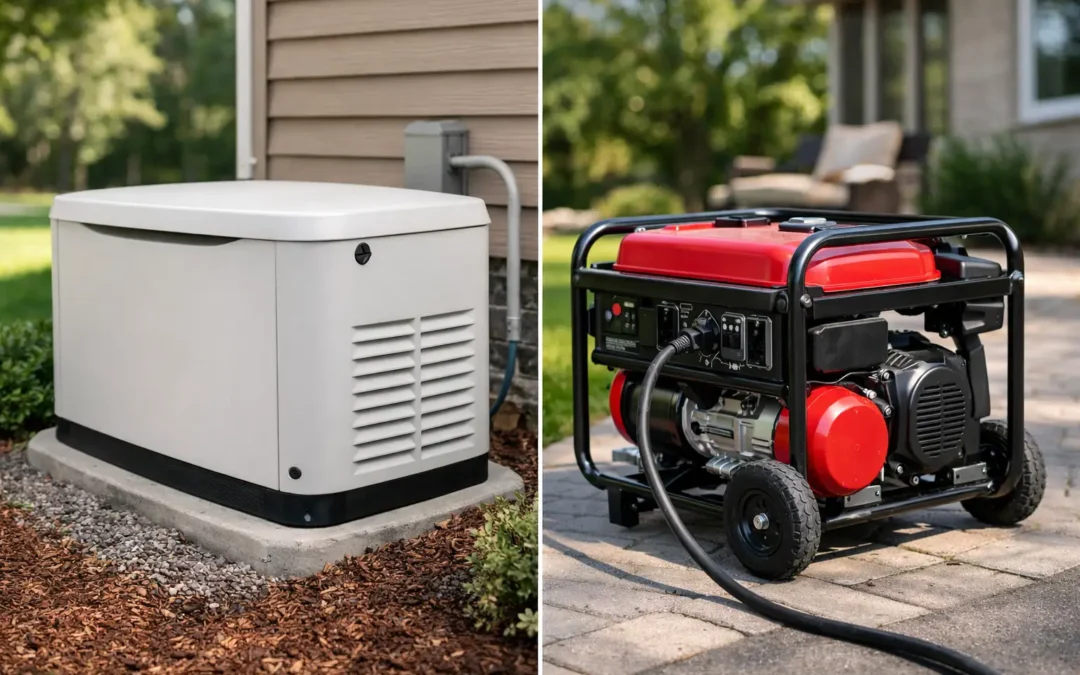
A portable generator is a movable, engine-powered unit that is usually fueled by gasoline, propane, or sometimes diesel. During an outage, it is positioned outdoors and connected either to individual appliances through extension cords or to selected home circuits through a professionally installed transfer switch or inlet connection.
A standby generator is permanently installed outside the home, much like an outdoor HVAC component. It is typically fueled by natural gas or propane, monitors utility power continuously, and starts automatically when it detects an outage. A transfer switch then moves designated circuits, or potentially the entire home, onto generator power.
The key distinction is simple: portable generators require hands-on setup and fuel management, while standby systems are designed to respond automatically. That convenience is meaningful when the power fails while you are away, asleep, or focused on protecting your family during severe weather.
What Can Each Type Power?
The answer depends on generator capacity and the electrical loads you choose to support. A smaller portable generator may be enough for a refrigerator, a few lights, phone chargers, a television, and perhaps a window air conditioner. Larger portable models can support more essential circuits when they are connected through the right equipment.
A standby generator can be sized for essential loads, such as refrigeration, lighting, internet equipment, garage doors, and a central air conditioning system, or sized for much broader coverage. Some homeowners want enough power to maintain most normal routines. Others prefer to protect only the necessities and keep the project budget focused.
Air conditioning deserves special attention in Florida. Central AC systems can draw a significant amount of power, especially at startup. A generator that appears large enough on paper may not reliably handle the starting demand of an AC unit alongside other household loads. Proper load calculations, panel evaluation, and equipment sizing are necessary before making a decision.
Start With Your Essential Loads
Before choosing a generator, make a realistic list of what your household needs during an outage. Refrigerators and freezers, medical devices, lighting, well pumps, security systems, internet equipment, and one cooling option may be priorities. Then consider which loads can wait, such as a pool heater, electric range, clothes dryer, or multiple HVAC zones.
This exercise often clarifies the best path. If your goal is to keep food cold and devices charged for a short outage, a portable unit may be sufficient. If you need reliable cooling, automatic operation, and power for critical home systems during a multi-day storm event, standby power becomes more compelling.
Convenience During Storm Season
Portable generators ask more of the homeowner. You need to bring the unit out, place it safely away from the home, start it, connect it properly, and monitor the fuel supply. Gasoline must be stored safely and may be difficult to find after a major storm. The generator also needs periodic testing and maintenance, even if it is used only occasionally.
Standby generators are designed for a different experience. When utility power drops, the system starts and transfers power automatically. When power returns, it transfers the home back to utility service and shuts down. Most units perform scheduled self-tests, and many can provide status alerts.
Automatic operation is especially valuable for residents who travel during hurricane season, have mobility limitations, care for older relatives, or rely on powered medical equipment. It also removes the need to go outside and handle equipment in poor conditions.
That said, a standby system still needs professional maintenance. Fuel supply, battery condition, oil level, air filters, electrical connections, and transfer-switch operation all affect whether it will perform when needed.
Safety Is Not Optional
Generator safety is a major reason to look beyond the unit itself. Carbon monoxide poisoning, fire hazards, and electrical backfeeding can turn an outage into an emergency.
A portable generator must always operate outdoors, well away from doors, windows, vents, and attached garages. It should never run inside a garage, under an enclosed patio, or near openings where exhaust can enter the home. Carbon monoxide alarms should be installed and tested throughout the house.
Homeowners should also never connect a portable generator directly to a wall outlet or electrical panel without an approved transfer switch or interlock installed by a qualified electrician. This dangerous practice can send electricity back onto utility lines, putting utility workers, neighbors, and your own electrical system at risk.
Standby generators avoid some of the setup risks because they are permanently installed with approved fuel and electrical connections. However, installation must meet local codes, manufacturer requirements, setback rules, and permitting standards. Placement, ventilation, grounding, load calculations, and transfer-switch selection are not details to guess at.
Cost: Upfront Price Versus Long-Term Value
A portable generator generally costs less to purchase and does not require the same installation investment as a standby system. For homeowners with modest backup needs, that lower entry cost can make sense. Keep in mind, however, that extension cords, inlet boxes, transfer equipment, fuel containers, weather protection, maintenance, and potential electrical upgrades may add to the total.
A standby generator requires a larger upfront investment. The project may include the generator, concrete pad, transfer switch, electrical labor, permits, fuel connection work, load management equipment, and possibly panel upgrades. The final price varies significantly based on the home and the level of backup power desired.
The value of a standby unit is less about producing the cheapest kilowatt and more about reducing disruption. For a household that loses refrigerated food, cannot run needed medical equipment, worries about leaving pets in a hot home, or regularly evacuates before storms, automatic backup power can provide meaningful peace of mind.
Fuel Availability Changes the Equation
Portable generators commonly use gasoline, and some models use propane or offer dual-fuel capability. Gasoline is familiar and widely available under normal conditions, but it has a limited storage life and can be hard to obtain after a widespread outage. Fuel also must be transported and added while the generator is shut down and cool.
Standby generators commonly use natural gas or propane. Natural gas can offer an ongoing fuel supply where service remains available during an outage. Propane gives homeowners more control over on-site fuel storage, but tank size and expected run time must be planned carefully. A generator that runs beautifully for a few hours is not necessarily prepared for several days without power.
When a Portable Generator Is the Better Fit
A portable generator may be the right choice when outages are usually brief, your budget is limited, and your goal is to cover a small group of essential appliances. It can also be a sensible temporary solution while you plan a larger electrical project.
The homeowner must be comfortable with the setup process, outdoor operation, fuel handling, and maintenance. For the safest and most useful result, pair the generator with a properly installed inlet and transfer solution instead of relying on a tangle of extension cords through open doors or windows.
When a Standby Generator Makes More Sense
A standby generator is often the better fit when power outages are frequent or prolonged, automatic response is a priority, or the home has critical loads that cannot be without power. It is also worth considering for households that want central AC support, have medical needs, travel often, or simply want a more dependable plan for hurricane season.
Proper sizing is the difference between a generator that supports your household and one that becomes an expensive disappointment. A licensed electrician can assess your panel, calculate loads, identify required upgrades, and determine whether load management can help meet your goals without oversizing the system.
Infinite Electric & Air helps homeowners evaluate generator options based on the way they actually use their homes, not a one-size-fits-all recommendation. Whether you choose portable backup power or a permanent standby system, make the plan before the forecast turns serious. The right equipment, installed and maintained correctly, gives your family one less urgent decision to make when the lights go out.