When the lights go out in Florida, the storm itself is only part of the story. Hurricane season power outage trends Florida homeowners deal with are shaped by wind speed, saturated ground, tree damage, aging equipment, and how quickly utilities can safely access affected areas. For families in Southwest Florida, that matters because the difference between a brief outage and a multi-day disruption often comes down to details most people never see.
What hurricane season power outage trends in Florida actually show
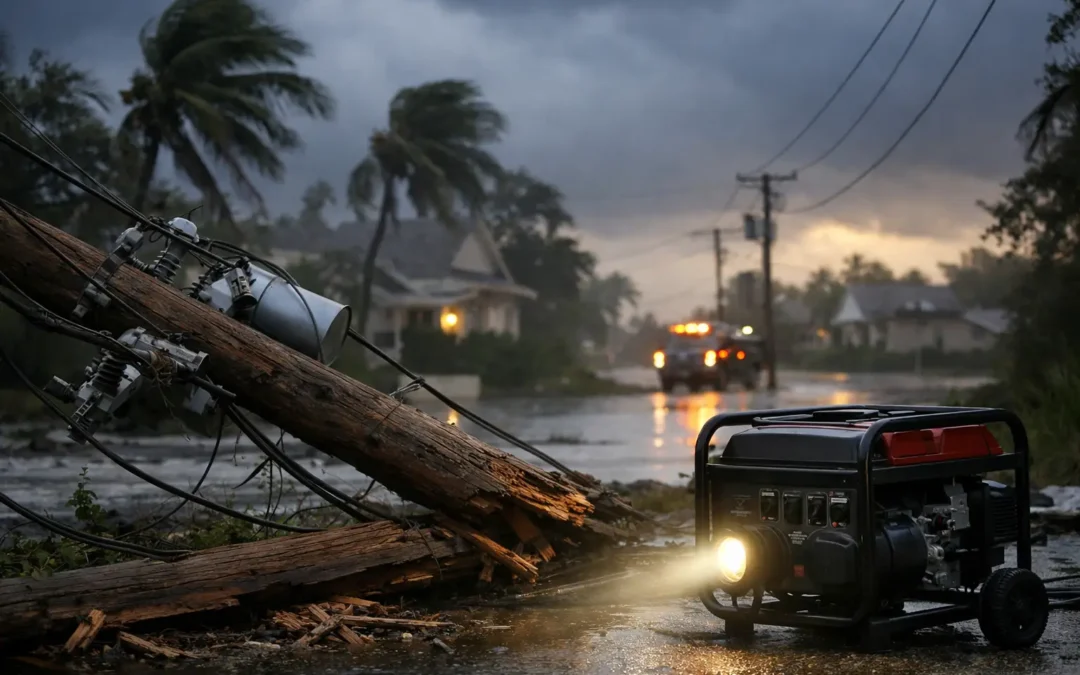
The biggest pattern is simple: outages are not evenly distributed, and they are not caused by one thing alone. A fast-moving storm with strong wind gusts can knock out service across a wide area, but a slower storm can be just as disruptive because prolonged rain softens the ground, making it easier for trees and poles to fall. Coastal communities may also deal with salt exposure, flooding, and storm surge complications that make damage assessments more difficult.
Another trend is that the number of customers affected gets attention, but outage duration is often the more useful number for homeowners. A neighborhood that loses power for six hours faces a very different level of risk than one that remains without service for three days in August heat. Refrigerated food, indoor air quality, medical equipment, internet access, and home security systems all become concerns quickly.
Utilities have improved grid hardening in many parts of the state, and that has helped in some events. Stronger poles, more aggressive vegetation management, and smarter switching technology can reduce outage spread. Still, improvements do not make homes storm-proof. Even a stronger grid can be interrupted by downed lines, flying debris, flooding around equipment, or a damaged transformer serving a specific pocket of homes.
Why some homes lose power longer than others
Homeowners often assume restoration follows a first-come, first-served model, but that is not how utility restoration works after a major storm. Utilities usually prioritize critical infrastructure and repairs that restore the largest number of customers first. That approach makes sense from a system perspective, but it can leave smaller residential clusters waiting longer even when the visible damage looks minor.
Location also matters. Homes near dense tree cover, older utility infrastructure, canals, flood-prone roads, or remote feeder lines may see longer restoration times. In areas such as North Fort Myers, Cape Coral, and nearby communities, the mix of overhead lines, mature landscaping, and storm-saturated soil can create a tough combination during hurricane season.
There is also an important difference between grid outages and house-specific electrical problems. After a storm, some homeowners assume the utility is still at fault when the real issue is a damaged meter base, compromised service mast, water intrusion in electrical components, or a panel problem inside the home. If neighbors have power and one home does not, the problem may be local to the property and may require a licensed electrician rather than waiting on utility restoration.
The weather patterns behind longer outages
Wind gets most of the blame, and often for good reason. Strong gusts break limbs, topple trees, and send debris into overhead lines. But rain and ground saturation are just as important. A tree that would normally withstand moderate wind may come down once the root system loses support in soaked soil.
Lightning also plays a role before, during, and after a named storm. Power surges and electrical faults can damage sensitive electronics and, in some cases, strain home electrical systems even if the outage itself is short. That is why surge protection deserves a place in the hurricane conversation, not just generator planning.
Then there is the heat factor. Florida storms do not always arrive as catastrophic hurricanes. Tropical storms and outer bands can still trigger outages, and when power fails during extreme heat, the comfort issue becomes a safety issue. Homes can warm up fast, especially those with older HVAC systems, poor insulation, or windows that take on strong afternoon sun.
Hurricane season power outage trends Florida homeowners should plan around
One of the most consistent trends is that short outages are common, but long outages are the ones that expose weaknesses in the home. A brief interruption may only reset clocks and Wi-Fi. A multi-day outage tests the electrical system, backup plans, and overall preparedness of the household.
That is why the right question is not only, “How often does power go out?” It is also, “What happens at my house when it does?” For one homeowner, the main issue may be food spoilage and discomfort. For another, it may be sump or condensate management, refrigerated medication, home office downtime, or the inability to run a well pump.
This is where proactive electrical planning makes a real difference. If a home has an outdated panel, limited surge protection, or no backup power strategy, storm season raises the stakes. Preparing before the forecast turns serious is almost always less stressful and more cost-effective than trying to solve electrical problems after landfall.
What backup power options make sense
There is no single answer for every home. Portable generators can help with short-term essentials, but they require proper setup, fuel management, and strict safety practices. They are not a casual appliance. Improper use can create carbon monoxide hazards, overload circuits, or damage equipment.
A whole-home generator offers a much more dependable solution for homeowners who want automatic backup for key systems or the entire house. It can keep air conditioning, refrigeration, lighting, and other essential circuits operating with far less interruption. The trade-off is cost, installation planning, and the need for regular maintenance. For many households in Southwest Florida, especially those with medical needs, frequent travel, or concern about heat exposure, that trade-off is worth it.
Some homes are better served by a partial-home setup focused on essentials rather than full-house coverage. That can be the practical middle ground. The right choice depends on budget, fuel source, load calculations, and what the household truly needs during an outage.
Electrical issues storms can expose inside the home
Storms do not only damage utility lines. They often reveal existing weaknesses in residential electrical systems. A panel that has been overloaded for years may start showing more obvious problems after repeated outages or surge events. Outdoor disconnects, service equipment, and connections can also suffer from moisture intrusion and corrosion.
If a home experiences flickering lights, tripped breakers, burning smells, buzzing near the panel, or partial loss of power after a storm, those are warning signs that should not be ignored. The same applies if an air conditioner struggles to restart properly when power returns. HVAC systems are especially vulnerable to voltage fluctuations and surge-related stress.
This is one reason many homeowners schedule electrical inspections before peak hurricane activity. A licensed electrician can identify hazards that are easy to miss, such as loose connections, outdated equipment, inadequate grounding, or missing surge protection.
How to prepare without overdoing it
Good preparation is practical, not panic-driven. Start with the basics: know whether your panel is current and safe, understand what circuits matter most, and have a realistic outage plan for cooling, refrigeration, medications, and communication. If your home has never been evaluated for surge protection or backup power, hurricane season is a smart time to ask.
It also helps to think beyond the generator itself. If the electrical panel is undersized or outdated, a generator installation may require upgrades first. If the air conditioner is older, backup power may not perform the way you expect unless the system is assessed properly. Preparedness works best when the house is treated as a connected system rather than a collection of separate parts.
At Infinite Electric & Air, that is often the conversation homeowners need most – not just what product to buy, but what makes sense for the way their home is wired, cooled, and used every day.
What homeowners should watch this season
Watch the forecast, of course, but also watch your house. The homes that handle outages best are rarely the ones that react fastest at the last minute. They are the ones with safe panels, surge protection in place, a plan for cooling, and backup power that matches real needs.
Florida hurricane season power outage trends will keep shifting as utilities harden the grid and storms change in intensity, speed, and rainfall patterns. But one thing stays the same: homeowners who prepare early usually have more options, fewer surprises, and a safer home when the weather turns. If your electrical system has weak points, hurricane season has a way of finding them.