
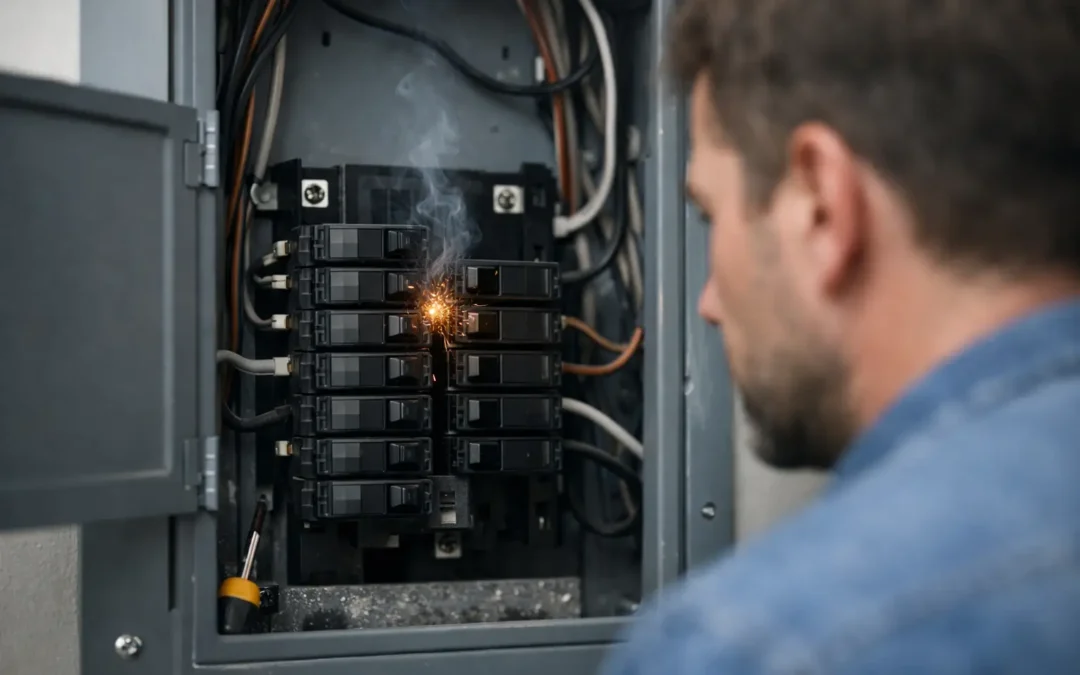
A breaker panel is not supposed to hum, buzz, or crackle. So, is a buzzing breaker panel dangerous? Potentially, yes. While a faint sound can occasionally come from a single overloaded circuit or aging component, buzzing can also signal loose wiring, overheating, arcing, or a failing breaker – all conditions that deserve prompt attention in a home.
The safest response is to take the sound seriously without attempting a DIY repair. Electrical panels contain energized parts even when individual breakers are switched off. A licensed electrician can identify the source of the noise and determine whether the repair is as straightforward as replacing a breaker or whether the panel has a larger safety issue.
Why a Breaker Panel May Buzz
Electricity moving through a properly installed panel should be quiet. Buzzing usually means a connection, breaker, or electrical load is behaving in a way it should not. The location and character of the sound matter. A low, steady hum from one breaker is different from a sudden, loud buzz, a sizzling sound, or intermittent crackling.
One common cause is a loose electrical connection. When a wire is not firmly secured to a breaker or terminal, electricity can jump across tiny gaps. This is called arcing. Arcing creates heat and can damage insulation, breakers, and panel components over time. It also raises the risk of an electrical fire.
An overloaded circuit can create a buzzing sound as well. This may happen when high-demand appliances share a circuit, such as a microwave, air fryer, refrigerator, portable AC unit, or garage equipment. In Southwest Florida, electrical demand can climb during long stretches of hot weather, especially when an air conditioner is running constantly. The panel may be revealing that the home needs circuit changes, repairs, or an upgrade to support its actual electrical load.
A worn or defective breaker is another possibility. Breakers are safety devices designed to trip when a circuit draws too much current. Like other mechanical and electrical components, they can deteriorate with age, corrosion, heat exposure, or repeated tripping. A failing breaker may buzz, feel warm, trip unexpectedly, or fail to trip when it should.
Older panels deserve particular attention. Some homes have panels that were adequate when installed but are now carrying more electronics, appliances, charging equipment, and cooling loads than originally planned. Storm-related power surges and Florida humidity can also contribute to corrosion and wear inside electrical equipment.
When a Buzzing Breaker Panel Is an Emergency
Any electrical noise warrants a professional inspection, but certain signs mean you should act immediately. Do not wait for a convenient appointment if the buzzing is accompanied by a burning odor, smoke, sparks, visible discoloration, or a hot panel cover. These symptoms can indicate active overheating or arcing.
If it is safe to do so, turn off the main breaker only when there is no smoke, fire, or danger near the panel. Keep your hands dry, stand on a dry surface, and do not touch exposed wires or remove the panel cover. If you see flames, smell strong burning insulation, or hear loud crackling, leave the area and call 911.
You should also treat repeated breaker trips as a warning. A breaker that trips once after an obvious overload may simply be doing its job. A breaker that repeatedly trips, buzzes, or will not reset should not be forced back on. Repeatedly resetting it can allow a developing problem to worsen.
Signs that call for same-day electrical service
Arrange urgent service if you notice the following conditions:
- A burning, fishy, or melting-plastic odor near the panel
- A panel cover, breaker, or wall area that feels warm or hot
- Buzzing that grows louder when an appliance starts
- Flickering lights, dimming lights, or outlets that stop working
- Rust, water stains, or corrosion around the panel
- Breakers that trip frequently or cannot remain in the on position
These signs do not always mean a fire is imminent, but they are not normal household inconveniences. They require a trained diagnosis.
What You Should Do Before the Electrician Arrives
Start by paying attention to the sound from a safe distance. Note whether it comes from the main breaker, one specific circuit breaker, or the panel as a whole. If the noise changes when the air conditioner, oven, dryer, or another large appliance turns on, make a note of that too. This information can help an electrician narrow down the cause.
Avoid opening the panel cover. The breakers visible behind the door are intended for normal use, but the equipment behind the dead-front cover can remain energized. Tightening a connection, moving wires, or replacing a breaker without proper testing is not a safe homeowner project.
You can reduce demand on the suspected circuit by unplugging nonessential appliances. For example, if the buzz seems to occur when several kitchen appliances are operating, stop using the smaller appliances until the circuit is inspected. Do not use extension cords as a long-term workaround, and do not replace a breaker with a larger one to stop tripping. Oversizing a breaker can allow wiring to overheat before the breaker trips.
If you know which breaker serves the affected area and the panel is otherwise cool and free of smoke or burning smells, switching that individual breaker off may be appropriate until service arrives. If you are unsure which breaker is involved, leave the panel alone and call a professional.
The Difference Between a Panel Problem and a Power Problem
Not every electrical issue begins inside the panel. A loose service connection, damaged meter equipment, or utility-side problem can sometimes cause unusual sounds or inconsistent power. During severe weather, storm damage and voltage fluctuations can affect electrical equipment throughout a neighborhood.
That said, homeowners should not assume the utility is responsible simply because the issue appeared after a storm. An electrician can inspect the home-side equipment, test connections, and identify whether the issue needs to be reported to the power company. This distinction matters because a panel problem must be repaired before it can create further damage inside the home.
What a Professional Electrical Inspection Includes
A licensed electrician does more than listen for the buzz. The inspection typically includes checking breaker condition, conductor sizing, panel connections, signs of heat damage, grounding and bonding, corrosion, and the load placed on the panel. Testing can reveal loose or failing components that are not obvious from the outside.
The right repair depends on what is found. A single faulty breaker may need replacement. A damaged wire or loose connection may require repair and testing. If the panel is undersized, heavily corroded, outdated, or showing widespread heat damage, a panel upgrade may be the safer long-term option.
There is a practical trade-off here. Replacing one breaker can be less expensive in the short term, but it is not a solution if the panel itself is overloaded or deteriorating. A qualified electrician should explain the findings clearly, outline the options, and provide transparent pricing before work begins.
Protecting Your Home After the Repair
Once the immediate issue is resolved, consider what placed stress on the system in the first place. Adding a new HVAC system, electric vehicle charger, pool equipment, generator connection, or major appliance can change a home’s electrical needs. Planning dedicated circuits and adequate panel capacity before adding equipment helps prevent future overloads.
Whole-home surge protection can also be valuable in Florida, where lightning and utility fluctuations are a regular concern. Surge protection will not repair a buzzing panel, but it can help protect sensitive appliances and electronics after the underlying electrical system is safe and properly maintained.
A buzzing breaker panel is your home asking for attention. If you hear one, stop using the affected circuit when safe, avoid opening the panel, and arrange a professional inspection. Infinite Electric & Air can help homeowners in Southwest Florida identify the cause and make the repair needed to keep power dependable and the home protected.