
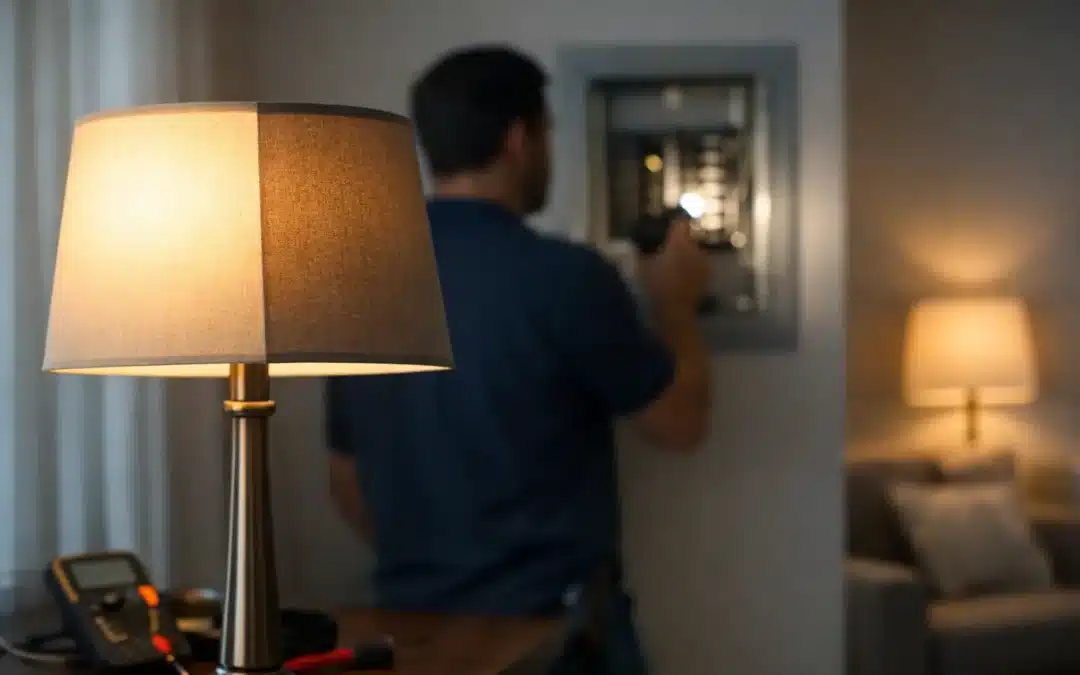
A kitchen light drops in brightness when the air conditioner starts, then returns to normal a second later. That moment raises a fair question: why do lights dim, and is it a harmless inconvenience or an electrical warning? The answer depends on what is running, how often it happens, and whether the dimming affects one light, one room, or the entire house.
A brief, small dip when a large motor starts can be normal. Repeated dimming, severe brightness changes, buzzing, hot outlets, or lights that get brighter without explanation deserve prompt attention. In Southwest Florida, where air conditioners, pool equipment, and storm-related power issues place real demands on home electrical systems, knowing the difference can help protect your comfort and safety.
Why Do Lights Dim When Appliances Start?
Many household appliances need a larger burst of electricity to start than they need to keep running. This is called starting current or inrush current. Air conditioners, refrigerators, garbage disposals, well pumps, pool pumps, and some power tools use motors or compressors that can briefly pull significant power at startup.
That sudden demand can cause a minor voltage drop on the circuit or in the home’s electrical system. Incandescent bulbs make this especially obvious because they react immediately to small voltage changes. Some LED bulbs may flicker instead, particularly if they are lower-quality bulbs or are paired with incompatible dimmer switches.
If the lights dim slightly for a moment only when a central AC system or another large appliance starts, the system may simply be responding to normal startup demand. Still, “normal” does not mean it should be ignored forever. If the dimming becomes more noticeable, lasts longer, or has recently started, an electrical inspection can identify whether the equipment or electrical system is under more strain than it should be.
The circuit may be carrying too much
A common cause is an overloaded circuit. For example, a garage circuit might supply lights, outlets, a refrigerator, chargers, and a freezer. When a high-demand item switches on, the lights on that same circuit can dim.
The practical fix may be as simple as moving devices to different circuits. In other cases, the right solution is installing a dedicated circuit for equipment that needs one. Major appliances, HVAC equipment, and pool equipment should be evaluated based on their electrical requirements rather than added wherever there is an available outlet.
The electrical panel may be undersized or outdated
An older panel may have been adequate when the home had fewer electrical loads. Add a newer, larger air conditioner, electric vehicle charging, a pool heater, home office equipment, kitchen appliances, or a generator connection, and the original service can become less suitable for the way the home is used now.
A panel upgrade is not automatically the answer whenever lights dim. The electrician should first assess the electrical load, panel condition, circuit layout, connections, and voltage. If the service is near capacity, however, an upgrade can improve reliability and create room for safe future additions.
When Dimming Lights Point to an Electrical Problem
The pattern of the dimming tells an important story. A slight, occasional dip in one area of the house is different from lights throughout the home noticeably fading, surging, or changing brightness.
Pay close attention if lights dim when an appliance is not starting, if they brighten suddenly, or if several unrelated circuits are affected at the same time. These symptoms can point to a loose connection, a problem at the panel, an issue with the service equipment, or a utility-side problem. Loose electrical connections create resistance and heat, which can damage wiring or equipment and raise fire risk.
Call a licensed electrician promptly if you notice any of these warning signs:
- Lights dim deeply, flicker frequently, or become brighter unexpectedly.
- Breakers trip repeatedly or a panel makes buzzing, crackling, or popping sounds.
- Outlets, switches, cords, or the electrical panel feel warm or smell burnt.
- Dimming occurs throughout the home when the AC, dryer, pool pump, or another large load runs.
- The issue began after storm damage, a power outage, a renovation, or installation of new equipment.
Do not remove the panel cover or try to tighten connections yourself. Electrical panel work involves energized components and requires the right diagnostic tools, training, and safety procedures.
A loose neutral needs urgent attention
One of the more serious causes of unusual light behavior is a loose neutral connection. In a typical home electrical system, the neutral helps keep voltage balanced. When that connection is loose or damaged, some lights may dim while others become unusually bright.
This is not a bulb issue. It can expose appliances and electronics to improper voltage and may damage sensitive equipment. Turn off sensitive electronics if it is safe to do so, avoid using major appliances, and arrange for professional service as soon as possible. If neighbors are experiencing the same problem, contact the utility company as well, since the fault may be outside the home.
The fixture, bulb, or dimmer may be the problem
When only one fixture flickers or dims, start with the simpler possibilities. A loose bulb, failing LED driver, worn socket, failing switch, or incompatible dimmer can all cause localized problems.
Turn off power before handling a bulb, and let hot bulbs cool first. If a new, compatible bulb does not solve the issue, or the fixture is warm, noisy, or discolored, stop using it until it has been checked. LED bulbs should be labeled dimmable when used on a dimmer, and the dimmer itself must be rated for LED loads. Even then, some combinations perform better than others.
Why Florida Homes May Notice Dimming More Often
Southwest Florida homes rely heavily on air conditioning for much of the year. When an AC compressor starts, the electrical demand rises quickly. If lights dim more than slightly when the system starts, the cause may involve the AC equipment, its dedicated circuit, the electrical panel, or the home’s incoming power.
An HVAC technician can evaluate the air conditioner’s mechanical and electrical performance, including components such as the capacitor and compressor. An electrician can assess voltage drop, connections, circuit sizing, grounding, panel condition, and service capacity. Sometimes the issue crosses both systems, which is why a coordinated diagnosis matters more than guessing.
Storms add another variable. Lightning, wind damage, and utility disruptions can affect electrical equipment and power quality. Whole-home surge protection helps reduce the risk from certain voltage surges, but it does not correct loose wiring, an overloaded panel, or a failing appliance. It is one layer of protection, not a substitute for a sound electrical system.
What to Do Before Scheduling Service
You do not need to diagnose the problem yourself, but a few observations can help the electrician find the cause efficiently. Notice which lights dim, what appliance is running at the time, how long the change lasts, and whether breakers trip or other devices behave strangely.
It also helps to note whether the issue affects the entire house or only one area. If dimming is limited to a single room, the problem may be on that branch circuit. If lights in multiple rooms react when the AC or dryer starts, the electrician will look more closely at the panel, service connections, and the high-demand equipment involved.
Avoid repeatedly resetting a tripped breaker. A breaker that trips is doing its job by interrupting a potentially unsafe condition. Resetting it once after unplugging the suspected load may be reasonable, but continued tripping calls for a professional evaluation.
The Right Fix Depends on the Cause
There is no one-size-fits-all repair for dimming lights. A minor issue may need a compatible LED bulb or a new dimmer. A circuit problem may require redistributed loads, a dedicated circuit, or repair to a connection. A larger concern could involve panel repairs, a service upgrade, or evaluation of the incoming utility connection.
The goal is not simply to make the lights look steady. It is to identify why the voltage is changing and make sure your home’s electrical system can safely support the equipment you depend on every day.
If your lights dim regularly, become brighter unexpectedly, or react strongly when your AC or other major equipment starts, schedule an electrical evaluation with a licensed professional. Infinite Electric & Air helps homeowners in Cape Coral, Fort Myers, North Fort Myers, and nearby communities get clear answers and practical repairs, so a small warning sign does not become a larger disruption.