
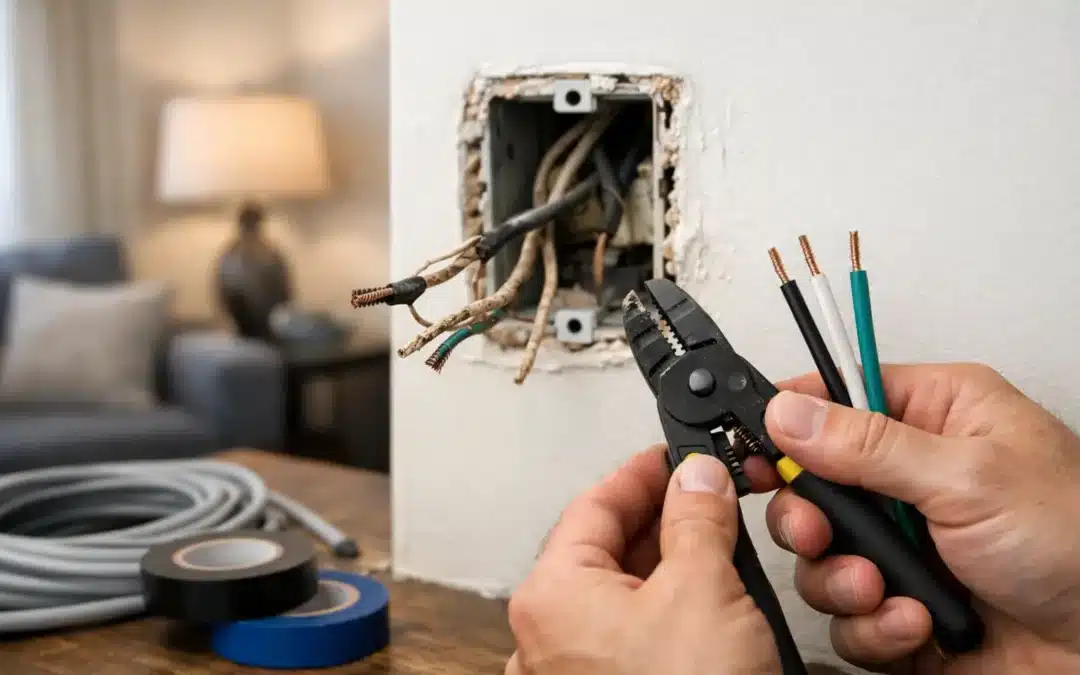
A breaker that trips once after a storm is not always a sign that your entire home needs rewiring. But a breaker that trips repeatedly, outlets that feel warm, or lights that dim when the AC starts are signals worth taking seriously. Knowing when should wiring be replaced can help you address a safety issue before it becomes a fire risk, a costly repair, or an inconvenient loss of power.
For Southwest Florida homeowners, the answer is rarely based on a single date. Your home’s age matters, but so do the wiring material, past renovations, electrical load, storm exposure, and condition of the panel and connections. A licensed electrician can evaluate the full system and recommend the right level of repair or replacement.
When Should Wiring Be Replaced?
Home wiring does not have a fixed expiration date. Well-installed copper wiring can often serve a home for many decades. However, insulation, connections, outlets, panels, and older wiring methods may deteriorate or become unsuitable for the way a modern household uses electricity.
Replacement becomes more likely when wiring is visibly damaged, has unsafe materials or connections, cannot support the home’s electrical demand, or fails to meet current safety needs during a remodel. In some cases, an electrician may recommend replacing a single circuit or correcting damaged sections instead of rewiring the whole home. That is why an inspection is more useful than relying on the home’s construction year alone.
Your home has outdated wiring materials
Some older wiring systems deserve prompt professional attention. Knob-and-tube wiring, commonly found in much older homes, lacks the grounding protection expected in modern electrical systems. It was not designed for today’s appliances, electronics, air conditioning equipment, and electrical loads.
Aluminum branch-circuit wiring, used in some homes built primarily from the mid-1960s through the early 1970s, can also require evaluation. Aluminum expands and contracts differently than copper. At improperly installed or aging connections, that movement can lead to overheating. It does not automatically mean every wire must be removed, but it does require an electrician who understands approved repair methods and connection requirements.
Older cloth-insulated wiring is another concern. Its insulation can become brittle over time, crack, and expose conductors. If you see frayed insulation in an attic, crawlspace, garage, or near an electrical panel, keep clear of the area and arrange a professional assessment.
You notice heat, burning smells, or discoloration
Electrical components should not smell burnt or feel hot during normal use. A warm outlet cover, scorched receptacle, black marks around a switch, buzzing sound, or a sharp burning odor can indicate a loose connection, overloaded circuit, damaged wiring, or failing device.
Turn off power to the affected circuit if you can do so safely at the panel, avoid using the outlet or switch, and call a licensed electrician. Do not cover the problem with a new faceplate, repeatedly reset a breaker, or assume the issue will resolve on its own. Heat at an electrical connection can escalate quickly.
Breakers trip or fuses blow repeatedly
A circuit breaker is designed to interrupt power when it detects an overload, short circuit, or ground fault. An occasional trip after plugging too many devices into one circuit may point to an overload. Frequent trips, especially when they happen with ordinary use, need investigation.
The wiring may be undersized for the circuit’s demand, a connection may be damaged, or an appliance may have a fault. In homes with older fuse boxes or undersized panels, the issue may involve the larger electrical system rather than one outlet. Never replace a breaker with a larger size just to stop tripping. The breaker must be correctly matched to the wire size and circuit design.
Lights flicker, dim, or behave inconsistently
One loose bulb can make one fixture flicker. But widespread flickering or lights that dim when large equipment starts can signal a more significant issue. Pay attention if lights fluctuate when the refrigerator cycles, the dryer runs, or the air conditioner starts.
In Southwest Florida, high-demand cooling equipment puts real pressure on a home’s electrical system for much of the year. Voltage drops, loose neutral connections, aging panel components, or undersized circuits may all contribute to inconsistent lighting. An electrician can determine whether the cause is inside the home, at the panel, or related to the utility connection.
Other Signs Your Home May Need Rewiring
Some warning signs are less obvious because homeowners adapt to them over time. Extension cords running permanently along walls, power strips used in every room, and too few outlets can indicate that the electrical system no longer matches how the home is used.
Watch for these conditions as well:
- Two-prong outlets throughout the home, especially where grounded outlets are needed for modern equipment.
- Loose plugs that fall out of receptacles or switches that crackle when operated.
- Damaged wire insulation caused by rodents, moisture, pests, renovations, or attic heat.
- A panel with corrosion, water intrusion, double-tapped breakers, or signs of previous improper work.
- Renovations that added rooms, appliances, or outdoor equipment without adding properly sized circuits.
A lack of GFCI protection is also a common safety concern. GFCI outlets or breakers help reduce shock hazards in areas such as bathrooms, kitchens, garages, laundry rooms, exterior locations, and near pools. AFCI protection may also be required for certain living areas in newer work. Upgrading protection does not always require a complete rewire, but it may be part of a broader electrical update.
Age Matters, But It Is Not the Whole Story
Homes built 40, 50, or more years ago are more likely to have electrical features that warrant an inspection. Still, age alone does not prove the wiring is unsafe. A carefully maintained older home with copper wiring and thoughtful upgrades may be in better condition than a newer home with poor workmanship or storm-related damage.
The more useful questions are: Has the home been remodeled? Has the panel been upgraded? Are there enough dedicated circuits for the kitchen, laundry, HVAC equipment, and garage? Has water entered the panel or attic? Are there recurring electrical symptoms?
Florida’s weather adds another layer. Humidity, salt air near the coast, lightning, flooding, and wind-driven rain can affect electrical equipment and connections. After a hurricane, flood event, or major water intrusion, an electrical inspection is a sensible safety step even if the power has returned and everything appears normal.
Whole-Home Rewiring vs. Targeted Electrical Repairs
A whole-home rewire is a substantial project. It may involve opening portions of walls and ceilings, installing new circuits, updating outlets and switches, improving grounding and bonding, and coordinating panel upgrades. It is often the right choice when wiring is broadly unsafe, severely deteriorated, or unable to support a major renovation.
Targeted repairs can be the better answer when the concern is limited to a few damaged circuits, an outdated receptacle, a poor connection, or a specific addition to the home. For example, adding a dedicated circuit for a new appliance or correcting wiring damaged by moisture does not necessarily mean replacing every wire in the house.
The trade-off is future planning. If walls are already open for a kitchen remodel or room addition, it can be cost-effective to update aging circuits at the same time. A licensed electrician should explain what is urgent, what is recommended, and what can reasonably be planned for later, with transparent pricing before work begins.
What to Expect From a Professional Electrical Inspection
A proper evaluation goes beyond looking at a few outlets. The electrician may inspect the service panel, breakers, visible wiring, grounding and bonding, outlets, switches, GFCI and AFCI protection, load demands, and signs of heat or moisture damage. They may also ask about breaker trips, flickering lights, renovations, generator plans, and high-energy appliances.
The goal is not to sell a rewire that your home does not need. It is to identify safety concerns, verify that the system can support your household, and give you a clear path forward. At Infinite Electric & Air, licensed professionals can help homeowners understand whether the right solution is a repair, a circuit upgrade, panel work, surge protection, or more extensive wiring replacement.
If you have noticed warning signs, do not wait for a complete power failure to get answers. A timely inspection can turn an uncertain electrical issue into a clear, practical plan for keeping your home safe and dependable.