
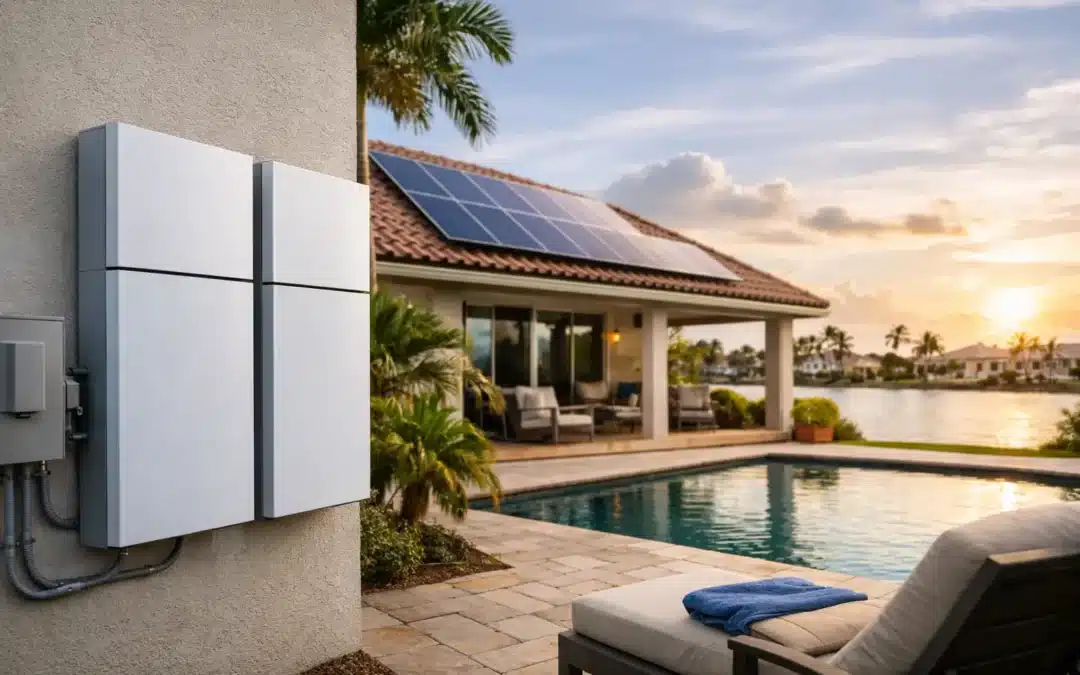
A summer storm can take out power long after the rain has stopped. In Southwest Florida, that is more than an inconvenience. Without electricity, refrigerated food, medical equipment, internet service, lighting, and air conditioning can all become immediate concerns. A home battery backup system can provide power when the grid goes down, but choosing one requires more than picking the largest battery available.
The right system depends on what you need to keep running, how long you need it to run, and whether your home’s electrical equipment is ready to support it. For homeowners in Cape Coral, Fort Myers, North Fort Myers, and nearby communities, careful planning matters as much as the battery itself.
What Is Home Battery Backup?
A home battery backup stores electricity for use during an outage. It may charge from the electrical grid, a solar energy system, or both. When utility power fails, the battery system disconnects the home from the grid and supplies selected circuits or, in some cases, the entire home.
That controlled disconnect is essential. A properly installed battery system prevents power from feeding back into utility lines, which protects utility crews and your equipment. It also allows the system to switch to backup power safely and automatically.
Most homeowners do not need to power every device in the house. A well-designed system often supports essential loads, such as the refrigerator, kitchen outlets, lights, Wi-Fi equipment, garage door opener, a few bedroom outlets, and medical devices. Some larger systems can support more, but the cost and battery capacity increase quickly when you add high-demand equipment.
The Florida Outage Question: What Needs to Stay On?
The first question is not, “How big of a battery should I buy?” It is, “What do I need to power during an outage?” That answer changes from one household to the next.
For many homes, refrigeration, communication, lighting, and a few comfort items are the priority. For others, a well pump, mobility equipment, CPAP machine, home office, or security system may need uninterrupted power. A homeowner who works remotely may place greater value on keeping internet equipment and designated outlets active.
Air conditioning deserves special consideration in Southwest Florida. Central AC systems use a substantial amount of electricity, especially during startup. A battery capable of running a whole-home central air conditioner for an extended outage can be significantly larger and more expensive than one designed for essential circuits. It can be done in certain situations, but it should be evaluated based on your equipment, home size, insulation, thermostat settings, and expected outage duration.
A practical option may be to power a smaller, dedicated cooling solution, such as a portable unit in one room, rather than trying to operate the entire HVAC system from a battery. The best approach is the one that protects your family without paying for capacity you are unlikely to use.
Understanding Runtime and Power Demand
Battery capacity is commonly measured in kilowatt-hours, or kWh. This indicates how much stored energy the battery has. Power output, measured in kilowatts, indicates how much the battery can supply at one time.
Both numbers matter. A battery may store enough energy for many hours of modest use, yet still be unable to start several large appliances at once. Electric ranges, dryers, water heaters, pool pumps, and central air conditioners can place heavy demands on a system.
Runtime also changes with your habits. A refrigerator cycles on and off, so it does not pull maximum power constantly. Leaving lights on throughout the house, running a coffee maker repeatedly, or operating multiple televisions will shorten battery life. During an outage, using power intentionally can make a meaningful difference.
Battery Backup vs. a Whole-Home Generator
Home battery backup and whole-home generators solve the same basic problem, but they do it differently.
A battery provides stored electricity. It is quiet, starts automatically, and does not require fuel delivery during an outage. When paired with solar, it may recharge during daylight hours, depending on system design and weather conditions. For short outages and essential-load coverage, a battery can be an excellent fit.
A standby generator creates electricity using fuel, typically natural gas or propane. It can continue operating for extended outages as long as fuel is available. Generators are often the stronger option for homeowners who want to run major systems, including larger air conditioners, over several days.
Neither option is automatically better. A battery may be ideal for quiet, automatic protection of key circuits and shorter interruptions. A generator may make more sense for long hurricane-related outages or homes with high electrical demand. Some properties benefit from a combination approach, using batteries for immediate backup and a generator for sustained power.
An experienced electrical professional can calculate your expected loads and explain the real-world trade-offs before you make a major investment.
Your Electrical Panel May Determine What Is Possible
A battery system is connected to your home’s electrical infrastructure, so the condition and capacity of your electrical panel matter. Older panels, crowded breaker spaces, outdated wiring, or insufficient service capacity can complicate an installation.
In some homes, an electrical panel upgrade is needed before adding battery backup equipment. In others, a critical-load panel can be installed to separate the circuits that will receive backup power from those that will not. This setup helps control energy use and can reduce the size and cost of the battery system.
Surge protection should also be part of the conversation. Power outages and restoration events can create voltage spikes that damage electronics, appliances, HVAC equipment, and connected devices. Whole-home surge protection does not replace battery backup, but it helps protect the equipment you rely on before, during, and after a storm.
What a Professional Assessment Should Include
Battery backup is not a one-size-fits-all electrical upgrade. A proper assessment should start with your household’s needs and the home’s existing equipment, not a sales pitch for a particular battery size.
A licensed electrician should review your main panel, service capacity, grounding, available installation space, and the circuits you want covered. They should also ask about your outage history, major appliances, medical needs, HVAC goals, and whether solar is part of your plans.
You should receive a clear explanation of what the system will and will not power. For example, “whole-home backup” can mean different things depending on the battery capacity, load management equipment, and homeowner expectations. Ask how long essential circuits are expected to run under typical use, what happens if the outage lasts overnight, and whether the system can expand later.
Permitting, local code requirements, manufacturer specifications, and utility interconnection rules are also part of a safe installation. These details are not optional. They protect your home, your electrical system, and the people working to restore power in your neighborhood.
Ways to Get More From a Backup Battery
Once your system is installed, a few habits can extend its usefulness during an outage. Keep essential circuits clearly identified so everyone in the household understands what is backed up. Avoid adding high-demand appliances to those circuits without confirming the system can support them.
It also helps to test the system according to the manufacturer’s recommendations. Confirm that household members know what the backup system does, where its monitoring information is located, and what to do if an alert appears. If your system includes solar charging, remember that production varies with weather, shade, and time of day. Storm conditions may limit how quickly the battery recharges.
For homeowners who rely on battery power for medical equipment, a backup plan beyond the battery itself is wise. Keep required contact numbers accessible, understand the device’s own backup capabilities, and do not wait until a hurricane watch is issued to confirm that your system is operating correctly.
Plan Before the Next Storm
A battery backup system should give you confidence, not uncertainty. The most effective setup is sized around your actual priorities, installed with the right electrical protections, and explained in plain language before an outage ever happens.
If you are considering home battery backup, Infinite Electric & Air can help evaluate your electrical panel, essential loads, and practical backup options for your home. A thoughtful electrical assessment now can make the next power interruption far less disruptive.