
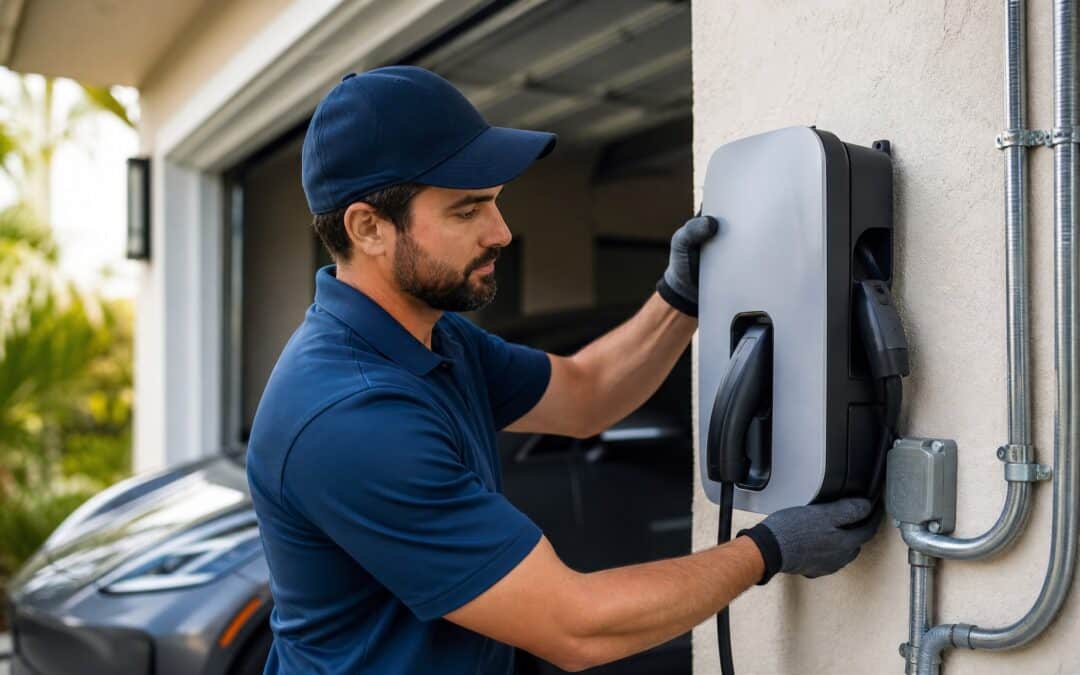
Bringing home a new electric vehicle is exciting, but getting it charged reliably takes more than plugging into a wall outlet. For homeowners across Cape Coral, Fort Myers, Naples, and Estero, EV charger installation in Southwest Florida means dealing with our coastal environment and local electrical codes at the same time. You need a setup that handles daily charging safely, without tripping breakers or corroding from salt air within a year. Infinite Electric & Air holds a 4.9 Google rating serving homeowners across those same four cities with licensed electrical and HVAC services, and we treat every installation like it’s going into our own garage.
Founder Vinny brings third-generation home services expertise to every EV charger installation, combining trade knowledge with a faith-driven commitment to honest, personal service. We don’t cut corners on permitting or equipment ratings, because your safety and your home’s value depend on doing this work right the first time. This guide walks you through what that process actually looks like for SWFL homes.
Why SWFL Homes Need Specialized EV Charger Installation
Installing charging equipment here means dealing with environmental and bureaucratic challenges that simply don’t exist in cooler, drier climates. Your installer has to understand both the weather and the local building department. Standard indoor-rated equipment fails fast when it’s exposed to Gulf Coast humidity and afternoon thunderstorms. That creates safety hazards, and it can void manufacturer warranties before you’ve even paid off the unit.
Humidity, Salt Air, and Outdoor-Rated Equipment
Southwest Florida’s salt air and humidity call for NEMA 4-rated outdoor enclosures and stainless steel hardware to prevent premature corrosion of EV charging equipment. A standard NEMA 3R enclosure might keep rain out, but it can’t stop the microscopic salt spray that eats through painted steel and unprotected circuit boards in coastal neighborhoods from Sanibel to Marco Island.
We specify marine-grade conduit fittings and corrosion-resistant fasteners for every exterior mount. Replacing rusted components after two storm seasons costs far more than using the right materials from the start. Your charger needs gaskets rated for continuous high-heat exposure, not just water resistance, summer temperatures inside an enclosure can exceed component limits even when the sun isn’t hitting it directly.
Local Permitting Requirements in Lee and Collier Counties
Permitting workflows vary a lot between jurisdictions, and knowing these differences ahead of time prevents frustrating delays when you’re eager to start charging at home. Fort Myers typically wants detailed load calculations submitted upfront. Cape Coral may ask for additional documentation on hurricane-rated mounting hardware for exterior installations. Naples and Collier County often have stricter aesthetic guidelines for visible exterior equipment, which affects where we can place your charger and what enclosure we use.
Skipping permits to save money creates liability issues when you sell the home later, and it leaves you without official inspection proof that the wiring meets current safety codes. We handle all permit applications and inspections directly, so you never have to deal with municipal portals or schedule inspectors yourself.
Electrical Panel Capacity Checks Before Installation
Your existing panel may lack the spare capacity for safe Level 2 charging even if it has empty physical slots. Available breaker spaces don’t equal available amperage. An honest assessment upfront prevents dangerous overloads and helps your new charger work with your home’s existing electrical system without nuisance tripping.
Load Calculations for Older SWFL Homes
Level 2 home chargers typically need dedicated 40-amp to 48-amp circuits, and many older SWFL homes with 100-amp panels can’t support that without upgrades. We perform a National Electrical Code Article 220 load calculation that accounts for your square footage, major appliances, air conditioning tonnage, and existing continuous loads to find your true remaining capacity.
Many mid-century homes in Fort Myers and Cape Coral were built with minimal electrical service, sized for a world with no electric vehicle, no tankless water heater, and smaller central air systems than modern units demand. Adding a 48-amp charger circuit to an already near-capacity panel creates fire risk and violates code, regardless of whether a physical breaker slot exists.
When a Panel Upgrade Is Necessary
If your load calculation shows insufficient headroom, upgrading your main service panel becomes a prerequisite, not an optional add-on. Watch for frequent breaker trips during peak usage, lights that dim when the AC kicks on, or a main breaker rated below 150 amps in a home with central air and an electric range.
You can review typical electrical panel upgrade costs in Florida to budget before committing to charger installation. Some homeowners coordinate panel upgrades with whole home generator installation, since both projects touch the main service and can share mobilization costs. Upgrading now also future-proofs your home for other electrification projects, like heat pump water heaters or induction cooktops, that are becoming standard in SWFL renovations.
Level 2 Charger Brand Compatibility and Selection
Choosing the right charger depends on your vehicle, your electrical system, and how you plan to use smart features over the next decade. The wrong choice limits functionality or forces expensive adapters. The right one fits your daily routine and your utility rate structure.
Tesla Wall Connector vs. Universal J1772 Chargers
Tesla Wall Connectors look sleek and integrate natively with Tesla vehicles, but they need specific wiring configurations and limit compatibility with non-Tesla EVs unless you buy a separate adapter. Universal J1772 chargers work with every EV sold in North America except Tesla (without an adapter), which makes them a better fit for households with multiple vehicles or plans to switch brands later.
Hardwired Tesla units typically allow higher amperage settings than plug-in universal models, but they also require permanent wiring connections that make relocation difficult if you reconfigure your garage. Our technicians install both types regularly and can tell you which option matches your vehicle lineup and long-term plans, based on actual field experience rather than manufacturer marketing.
Smart Features Worth Considering in 2026
Modern chargers now integrate directly with Florida Power & Light’s time-of-use rates, so charging can shift automatically to overnight hours when electricity costs less. Energy monitoring dashboards show real-time consumption and monthly totals, which helps you track charging expenses separately from household usage for tax credits or reimbursement.
Wi-Fi connectivity lets firmware update itself with new features and security patches, without a technician visit, extending the useful life of your investment. Load-sharing capabilities let two chargers share a single circuit safely, cutting installation costs for multi-vehicle garages where you don’t need simultaneous maximum-speed charging. Utility rate structures keep shifting toward dynamic pricing, so these features matter more now than they used to.
Level 2 Charger Install Cost Factors in Southwest Florida
Pricing varies by site condition rather than a flat rate, because every home has its own routing challenges and material needs. Knowing these variables helps you evaluate quotes fairly and avoid surprise change orders mid-project.
Wire run length from your panel to the charger location drives material costs significantly, especially when the route needs attic access, trenching through concrete, or conduit along exterior block walls. Conduit type matters too. PVC works fine for most interior runs, but UV-resistant liquid-tight or rigid metal conduit costs more for exterior exposures where sunlight and physical damage are real concerns.
Panel location relative to your garage decides whether we can route directly through shared walls or have to navigate around living space, which adds labor hours and finish repair. Permit fees differ between Lee County, Collier County, and individual municipalities, adding variable soft costs that show up as a line item on every quote. Existing panel condition affects price too. Finding corroded bus bars or double-tapped breakers during the pre-installation inspection adds remediation work needed for code compliance.
Choosing a Licensed EV Charger Installer in Fort Myers and Naples
Hiring the right contractor protects your home, your warranty, and your peace of mind in ways lowest-price bidding never can. This kind of electrical work calls for verified credentials and local reputation, not generic handyman promises or national lead-generation referrals.
Verifying Florida Electrical Contractor Licenses
Always verify an active EC or ER license through the Florida Department of Business and Professional Regulation before you sign a contract or pay a deposit. Unlicensed work voids equipment warranties, creates insurance coverage gaps during claims, and exposes you to liability if unpermitted work causes property damage or injury.
Licensed contractors carry workers’ compensation and general liability insurance that protects you from accidents on your property during installation. You can confirm license status instantly through the DBPR portal, and any reputable contractor will hand over their license number without hesitation. This check takes ninety seconds and can save you from problems that cost thousands to fix later.
The Value of Local Reviews and Community Trust
Third-generation local expertise matters, because experienced SWFL contractors know regional building practices, inspector preferences, and climate-specific failure modes that outsiders miss. Verified community reviews on Google and neighborhood platforms show consistent patterns about punctuality, communication, cleanup, and post-installation support that a glossy website can’t fake.
National lead-gen platforms connect you with whoever pays for the ad, not necessarily whoever does the best work in your zip code. When you look for trusted Fort Myers electrician services, look for reviews that mention specific technicians by name and describe how a complication got resolved, not generic five-star praise. Relationships built over decades in this community mean we answer the phone when storms hit and honor warranties years after installation, because our reputation depends on it.
This approach doesn’t suit homeowners hunting for the absolute lowest price regardless of permitting, code compliance, or long-term reliability. We compete on honest workmanship and lasting relationships, not on cutting corners to win bids from people who put upfront savings ahead of safety and durability.
Post-Installation Safety and Maintenance Tips
Protecting your investment takes a few simple seasonal checks that prevent costly failures during peak charging periods. Florida’s weather demands proactive attention that homeowners in milder climates can skip.
Inspect outdoor connections and conduit seals after every major storm season, checking that gaskets stay pliable and no water has gotten into junction boxes or the charger enclosure itself. Test GFCI protection monthly with the built-in test button. High humidity speeds up internal contact degradation, which can leave ground-fault protection useless with no visible exterior damage.
Clear vegetation and debris from around exterior-mounted units quarterly to keep airflow open and stop insect nests from blocking ventilation ports. Check mounting hardware annually for corrosion or loosening from thermal expansion and wind, and tighten or replace fasteners before small issues turn into safety hazards. Keep firmware updated through the manufacturer’s app so the charger’s safety protocols reflect the latest standards and patches.
Scheduling Your EV Charger Installation With Infinite Electric & Air
Leading with love, to us, means showing up on time, explaining your options honestly, and treating your home the way we’d treat our own family’s home. Every consultation includes a real load calculation, transparent pricing, and a realistic timeline, because trust comes from clarity, not sales pressure. Our faith-driven values shape how we do business day to day, from how we talk with you to how we clean up before we leave.
Contact us today to schedule your EV charger installation assessment and get a detailed quote built around your home. We serve homeowners throughout Cape Coral, Fort Myers, Naples, Estero, and the surrounding Southwest Florida communities with licensed electrical work backed by real local accountability. Let us help you charge your vehicle safely, legally, and reliably for years to come.