
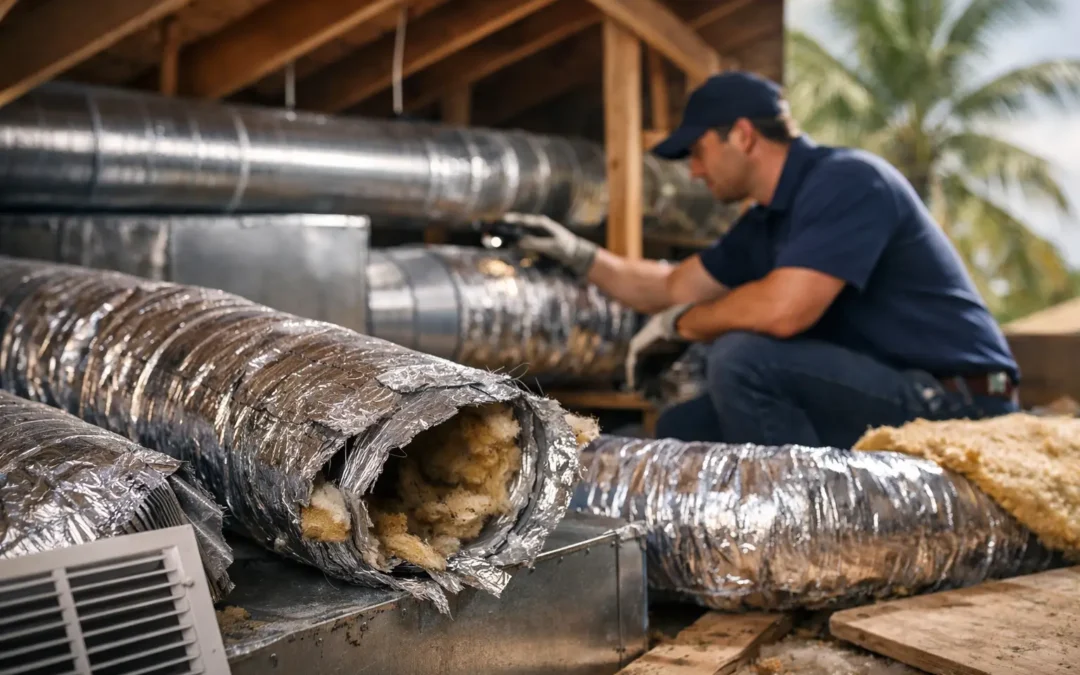
Your air conditioner may be running exactly as it should, yet some rooms still feel warm, humid, or stuffy. In many Southwest Florida homes, the problem is not the AC unit itself. It is the duct system carrying conditioned air through a hot attic, crawlspace, or garage. Knowing the ductwork replacement signs to watch for can help you address comfort problems before they lead to higher utility costs or unnecessary strain on your HVAC equipment.
Ductwork is easy to overlook because most of it is out of sight. But age, moisture, poor installation, storm damage, pests, and intense attic heat can all take a toll. A professional inspection can determine whether a targeted repair will solve the issue or whether replacing damaged sections – or the full system – is the more dependable long-term choice.
7 Ductwork Replacement Signs to Watch For
1. Some rooms never cool properly
A bedroom that stays warm while the living room feels comfortable is more than a minor annoyance. It can point to crushed, disconnected, undersized, or leaking ducts that are preventing enough conditioned air from reaching that room.
First-floor and second-floor temperature differences are common in Florida homes, especially where upper rooms sit below an uninsulated attic. However, the answer is not always a larger air conditioner. If the duct system is leaking or poorly designed, increasing AC capacity can create new problems, including short cycling and uneven humidity control. A duct evaluation helps identify whether airflow, insulation, equipment sizing, or a combination of factors is responsible.
2. Your energy bills keep climbing without a clear reason
Higher electric bills during the hottest months are expected. A sharp increase that does not match your household’s habits deserves attention. Leaky ducts can pull superheated attic air into the system or allow cooled air to escape before it reaches your rooms. Your AC then runs longer to make up the difference.
Duct leakage also affects more than efficiency. When return ducts pull air from an attic or garage, they may bring in dust, insulation particles, humidity, and unwanted odors. Sealing a small accessible leak may be enough in some cases. When flexible duct has deteriorated, insulation has failed, or connections are loose throughout the system, replacement is often the more practical fix.
3. You notice excessive dust or worsening indoor air quality
Every home collects dust, particularly during periods of frequent AC use. But if you are dusting constantly, seeing debris around supply vents, or noticing more allergy-like irritation indoors, damaged ductwork may be part of the problem.
Gaps in return ducts can draw unfiltered air into the HVAC system. Holes or damaged insulation can also allow attic dust to enter and circulate through the home. Dirty ducts do not automatically mean ducts need replacement, and cleaning alone will not fix leaks, disconnected runs, or water-damaged materials. The condition of the duct itself matters.
4. There is a musty odor when the AC starts
A brief smell after a system has been off may have a simple cause, such as moisture on the indoor coil or a drain issue. A persistent musty odor, however, should not be ignored. In Southwest Florida’s humid climate, duct insulation and interior duct materials can be affected by condensation, roof leaks, or long-term moisture exposure.
Visible mold growth, wet insulation, or ducts that repeatedly become damp require professional attention. The source of the moisture must be corrected along with any affected ductwork. Replacing contaminated or deteriorated sections may be necessary to protect air quality and prevent the problem from returning.
5. The ducts are visibly damaged, sagging, or disconnected
If you can safely see ductwork in an attic, garage, or utility area, look for obvious warning signs. Flexible ducts should not be sharply bent, flattened, heavily sagging, torn, or hanging loose from a connection. Metal ducts should not have open seams, major rust, or insulation that is falling apart.
A sagging flexible duct can restrict airflow much like a kinked garden hose restricts water. A disconnected duct can dump cooled air into the attic while leaving part of the home uncomfortable. These are often repairable when damage is isolated and the remaining system is in good condition. If multiple runs show the same wear, full replacement may offer better value and more reliable performance.
6. You hear rattling, whistling, or rushing air above the ceiling
HVAC systems make some normal operating sounds, but loud whistling near vents, rattling in the ceiling, or a pronounced rushing noise can signal an airflow issue. Air may be forcing its way through a gap, moving too quickly through an undersized duct, or passing through a loose connection.
Noise does not always mean replacement is required. A technician may be able to secure a connection, add support, or seal an accessible joint. Still, older systems with widespread poor airflow or improperly sized duct runs may need more than a quick patch. A properly designed replacement system can reduce noise while improving comfort from room to room.
7. Your ductwork is old and has needed repeated repairs
Ducts do not have a single expiration date. Their useful life depends on material, installation quality, attic conditions, maintenance history, and exposure to moisture or pests. That said, ductwork approaching 15 to 20 years old deserves a closer look, particularly if it has already needed several repairs.
Repeated tape fixes, recurring leaks, collapsing insulation, and ongoing hot spots are strong ductwork replacement signs. Repairing one section at a time can make sense when the issue is isolated. When multiple areas are failing, continuing to patch the system may cost more over time without delivering the comfort and efficiency your home needs.
Replacement Is Not Always the First Step
A trustworthy HVAC recommendation begins with an inspection, not a guess. Your technician should assess duct condition, insulation, connections, airflow, equipment performance, and signs of moisture intrusion. They should also consider the layout of your home and whether additions, renovations, or prior HVAC replacements changed the demands on the duct system.
In some homes, sealing and insulating ducts is the right solution. In others, replacing a few damaged runs can restore airflow. Full duct replacement is usually worth considering when the system has widespread damage, severe contamination, poor original design, or extensive leakage that cannot be effectively corrected.
Be cautious about treating duct replacement as a stand-alone decision. If your air conditioner is also nearing the end of its service life, planning both projects together may prevent mismatched equipment and repeated attic work. On the other hand, a newer, properly sized AC system may perform much better once failing ducts are repaired or replaced.
What to Expect From a Professional Duct Inspection
A thorough evaluation should be focused on finding the cause of the problem, not selling the biggest project. The technician may inspect accessible ducts for tears, loose connections, crushed runs, failed insulation, and moisture damage. They may also check supply and return airflow, temperature differences, system pressures, and the condition of the air handler.
For homeowners, clear communication matters just as much as technical findings. You should understand what is damaged, why it affects your comfort, which options are available, and what each option is expected to accomplish. At Infinite Electric & Air, our licensed HVAC professionals provide straightforward recommendations and transparent pricing so you can make an informed decision for your home.
Protecting New Ductwork in Florida Homes
If replacement is recommended, the quality of the installation matters. Properly sized duct runs, secure connections, supported flexible ducts, sealed joints, and suitable insulation help the system deliver cooled air where it belongs. Addressing attic ventilation, roof leaks, drain problems, or pest entry points may also be necessary to protect the new ductwork.
Routine HVAC maintenance gives technicians a chance to spot duct concerns early, before a small leak becomes a larger comfort or efficiency problem. Pay attention to new hot spots, sudden bill increases, persistent odors, and changes in airflow. Your home is usually giving you a clue – and addressing it early can make the next Florida summer far more comfortable.