
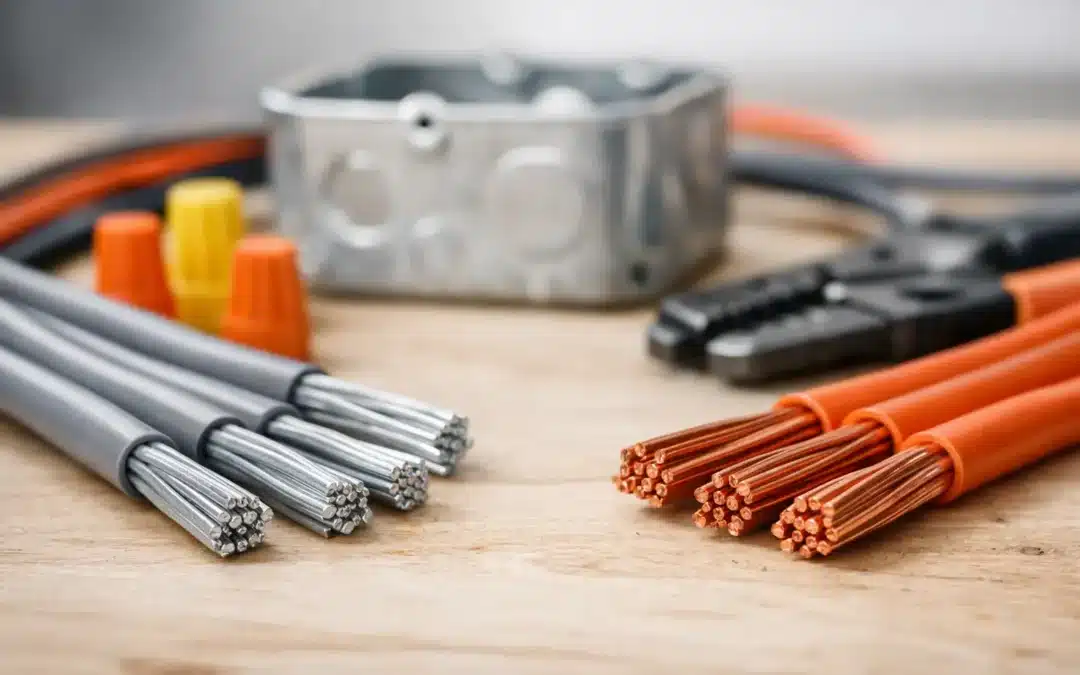
Aluminum versus copper wiring is not simply a question of which metal is better. For homeowners, it is a question of how the wiring was installed, where it is used, its current condition, and whether every connection is designed for that conductor. A home with aluminum wiring is not automatically unsafe, but it does deserve an informed, professional assessment.
In Southwest Florida, dependable electrical connections matter year-round. Air conditioners, pool equipment, refrigerators, storm preparation, and everyday electronics place real demands on a home’s electrical system. Understanding the differences between aluminum and copper can help you make practical decisions without assuming that a costly replacement is always the only answer.
Why Aluminum Wiring Is a Concern in Some Homes
Aluminum wiring became common in many U.S. homes during the 1960s and early 1970s, when copper prices rose sharply. It was often used for branch circuits, which are the smaller circuits that feed outlets, switches, and lighting throughout the home.
The concern is not that aluminum cannot carry electricity. Aluminum is a good conductor and remains widely used for larger electrical service conductors and feeders. The issue is that older aluminum branch wiring can behave differently from copper at connection points.
Aluminum expands and contracts more with temperature changes, and it can oxidize when exposed to air. Over time, these characteristics may loosen a connection at an outlet, switch, breaker, or splice. A loose connection creates resistance, which produces heat. If left unaddressed, that heat can damage devices, melt insulation, cause intermittent power problems, or create a fire risk.
Older wiring installations may also have terminals and connectors that were not well suited to aluminum conductors. That is why a home built or renovated during that period should be evaluated by a licensed electrician, especially if the wiring’s history is unclear.
Copper Wiring: Why It Is Common in Modern Homes
Copper is the standard material for most residential branch circuits today. It conducts electricity efficiently, has strong mechanical durability, and generally forms more stable connections at switches, outlets, breakers, and other electrical devices.
For the same electrical capacity, copper wire can usually be smaller than aluminum wire. It is also less prone to the expansion, contraction, and oxidation-related connection issues associated with older aluminum branch wiring. These qualities make copper a practical choice for the numerous connections found across a home.
Copper does cost more than aluminum, which is one reason aluminum still has a role in electrical work. Larger aluminum conductors can be a cost-effective and code-approved option for service entrance cables and feeders when they are correctly sized and terminated with equipment rated for aluminum use.
The material alone does not determine safety. Proper wire sizing, secure terminations, compatible devices, panel condition, grounding, and workmanship all matter. A poorly installed copper connection can overheat, too.
Aluminum Versus Copper Wiring: Where Each Makes Sense
For residential branch circuits, copper is generally preferred because it is reliable at the many connection points serving outlets, lights, appliances, and switches. It is the typical choice for new wiring and for many rewiring projects.
Aluminum is commonly used in modern homes for larger conductors, including electrical service wiring from the meter to the panel and feeder wires supplying a subpanel. Modern aluminum conductors are different from some of the materials used decades ago. When installed according to current electrical code using properly rated lugs, breakers, and connectors, aluminum can perform safely and effectively in these applications.
That distinction matters during a home inspection or panel upgrade. Finding aluminum wire inside a panel does not automatically mean there is a problem. A licensed electrician needs to identify whether it is older aluminum branch wiring, a properly installed large feeder, or a mixture of wiring types that requires closer review.
Warning Signs That Deserve a Prompt Inspection
Electrical problems do not always announce themselves clearly. Some older aluminum connections can look normal while developing resistance behind a cover plate or inside a junction box. Still, homeowners should arrange an inspection promptly if they notice warm or discolored outlets or switches, flickering lights, a burning odor, buzzing from a device or panel, frequently tripped breakers, or outlets that stop working intermittently.
Do not keep resetting a breaker or ignore a warm outlet because it seems to work again later. Breakers are designed to respond to overcurrent conditions, but they cannot correct every loose or deteriorating connection. Turn off power to the affected circuit if it can be done safely, avoid using the device, and contact a qualified electrician.
It is also wise to schedule an assessment when buying an older home, planning a remodel, adding a major appliance, replacing a panel, or installing a generator. These projects can expose wiring connections that have not been inspected in years.
What a Professional Electrical Assessment Includes
A proper evaluation goes beyond removing one outlet cover and identifying a silver-colored conductor. An electrician will look at the age and type of wiring, inspect accessible connections, examine the electrical panel, verify breaker and conductor compatibility, and check for signs of overheating or improper splices.
The electrician may also determine whether previous repairs were made with approved methods and components. Some older repairs involved joining copper and aluminum conductors with standard connectors or attaching aluminum wire to devices not rated for it. Those approaches can create new risks rather than solve the original issue.
The goal is to understand the actual scope. Some homes need corrections at a limited number of connections. Others may benefit from a more comprehensive repair program or partial rewiring. In cases where wiring is damaged, improperly installed, or repeatedly causing failures, full replacement with copper may be the best long-term option.
Repair Options for Older Aluminum Branch Wiring
There is no one-size-fits-all repair for aluminum wiring. The right approach depends on the wiring’s condition, the number of affected circuits, accessibility, planned renovations, and local code requirements.
One option is to use an approved connector system that creates a suitable transition from the existing aluminum conductor to a short copper lead, often called a pigtail. The copper lead then connects to a compatible device. Certain specialized repair methods and connectors are specifically designed and listed for aluminum-to-copper connections.
Another option is replacing portions of the branch wiring or rewiring the home with new copper conductors. This can be especially practical during a major renovation when walls and ceilings are already open. While rewiring is more involved, it may provide the clearest path forward for a home with extensive aging electrical issues.
Simply replacing outlets and switches with devices marked for aluminum compatibility is not always the right solution. The rest of the circuit still has splices, panel connections, and junction boxes that need attention. Likewise, applying anti-oxidant compound or tightening a connection without evaluating the full system is not a homeowner repair.
Why DIY Repairs Are Not Worth the Risk
Electrical work involving aluminum conductors requires the correct tools, listed materials, torque specifications, and knowledge of code requirements. A connection that feels tight can still be improperly prepared or damaged by over-tightening. The risk is hidden behind walls, at outlets, and in the electrical panel, where a mistake may not become obvious until heat builds over time.
A licensed electrician can identify which components are rated for the conductor, make repairs using approved practices, and advise whether your existing panel can safely support your home’s electrical needs. This is especially useful in Florida homes where high-demand equipment such as air conditioning systems, electric ranges, pool pumps, and generator connections may be part of the electrical load.
If your home has older aluminum branch wiring or you are unsure what material is behind your outlets and walls, an inspection can replace uncertainty with a clear plan. Infinite Electric & Air can help homeowners in Cape Coral, Fort Myers, North Fort Myers, and nearby communities evaluate their wiring and make safety-focused recommendations. The most helpful next step is not guessing what is inside the walls, but having the right professional inspect the connections that keep your home powered safely.