After a Southwest Florida storm, the question usually is not whether the power will flicker. It is how long your home can function if it does. When homeowners start comparing whole home generator vs standby generator options, they are often trying to solve a practical problem fast: keep the lights on, protect food and medications, run the AC, and avoid the stress that comes with an outage.
The confusing part is that these terms are often used as if they mean the same thing. In casual conversation, they sometimes do. But when you are investing in backup power for your home, the difference matters because it affects cost, coverage, installation, and your expectations during an outage.
Whole home generator vs standby generator: what is the difference?
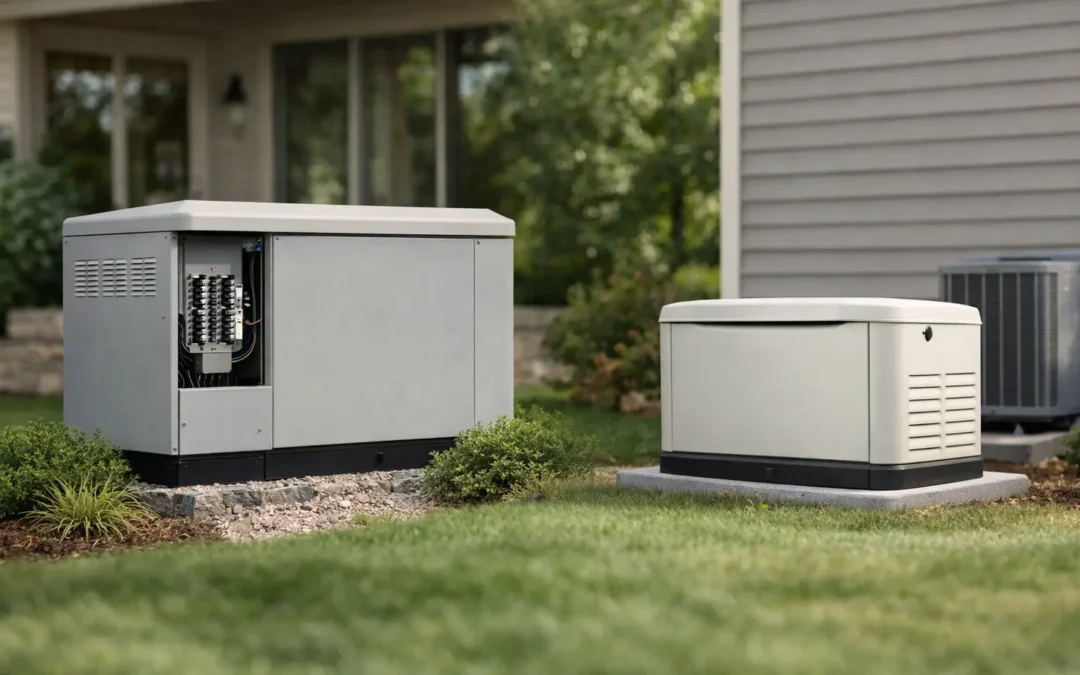
A standby generator is a generator that is permanently installed outside your home and turns on automatically when utility power fails. It connects through a transfer switch and usually runs on natural gas or propane. The key feature is automatic operation. You do not have to wheel it out, add extension cords, or start it by hand.
A whole home generator is usually a type of standby generator sized to power nearly all or all of your home’s essential systems at once. That can include central air conditioning, refrigeration, lighting, outlets, well pumps, security systems, and other major loads, depending on the size of the unit and the home’s electrical demand.
So the simplest way to think about it is this: all whole home generators are standby generators, but not all standby generators are truly whole home systems.
That distinction matters because some homeowners ask for a standby generator when what they really want is partial-home coverage. Others ask for a whole home generator when their budget or fuel setup may point toward a smaller standby unit that powers only priority circuits.
Why the wording matters when you are planning backup power
If your goal is to keep a few basics running, such as the refrigerator, some lights, internet, and perhaps a bedroom mini-split or portable AC, a smaller standby generator may be the right fit. It gives you automatic backup power without the cost of supporting every major appliance in the house.
If your goal is for life to continue almost normally during an outage, then a whole home generator is the better description of what you need. That usually means more power capacity, more detailed load calculations, and more coordination with your home’s panel and fuel source.
For Florida homeowners, this is especially important. Heat and humidity change the equation. In some parts of the country, backup power is mostly about keeping pipes from freezing or preserving food. Here, many families are also thinking about indoor temperature, medical equipment, sump or lift pumps, and storm recovery after utility service goes down.
How a standby generator works
A standby generator sits on a pad outside the home, much like an AC condenser. It is wired into the electrical system and paired with an automatic transfer switch. When the utility power goes out, the switch disconnects your home from the utility lines and signals the generator to start. Once stable power is produced, selected circuits or the whole panel are energized.
When utility power returns, the system transfers the load back and shuts the generator down. This process happens automatically, which is the biggest advantage over portable backup solutions.
That convenience is not just about comfort. It is also about safety. Permanent standby systems avoid the common risks that come with extension cords, backfeeding, and manually handling gasoline equipment during severe weather.
What makes a generator a whole home system
A whole home generator is less about style and more about capacity and design. It must be sized correctly for the house. That includes the startup demands of motors and compressors, especially central AC systems, pool equipment, refrigerators, and other large appliances.
This is where homeowners can get tripped up. A generator may be marketed as suitable for a whole home, but whether it truly powers your whole home depends on square footage, HVAC tonnage, electric water heating, cooking appliances, and how many loads may run at the same time.
In some cases, load-shedding modules can help a smaller generator behave more like a whole home system by prioritizing certain circuits and delaying others. That can reduce equipment cost, but it also means not everything operates simultaneously. For some households, that is a smart compromise. For others, especially if comfort and consistency are top priorities, it can feel limiting during a long outage.
Cost differences homeowners should expect
The biggest reason people compare whole home generator vs standby generator setups is budget. A smaller standby generator that covers essentials will generally cost less than a true whole home system. It uses a lower-capacity unit, may need less extensive electrical work, and often has lower fuel demand.
A whole home generator usually carries a higher upfront price because the generator itself is larger and the installation may be more involved. You may need panel upgrades, expanded transfer equipment, site preparation, gas service review, or propane storage planning.
Operating cost also deserves attention. Larger generators consume more fuel, especially when carrying heavy HVAC loads. That does not mean they are the wrong choice. It simply means the long-term cost of ownership should be part of the decision.
The cheapest option on paper is not always the least expensive over time. If a smaller unit leaves out critical systems, you may still deal with hotel stays, spoiled food, indoor heat, or interruptions that make the original savings feel less meaningful.
Fuel source and runtime considerations
Most residential standby and whole home generators run on natural gas or propane. Natural gas is often convenient because it does not require on-site refueling in the same way propane does. If your home already has natural gas service and the supply can support the generator’s demand, it can be an excellent solution.
Propane can work very well too, especially in areas where natural gas is not available. But propane systems require thoughtful tank sizing. Runtime depends on the generator load and the amount of fuel stored on site.
This matters in storm-prone areas. If roads are blocked or fuel delivery is delayed, your backup power plan should account for how long you may need to operate independently. A generator that powers everything in the house may also burn through fuel faster than a system designed only for essentials.
Which option is better for your home?
It depends on what you need your home to do during an outage.
If you want to maintain near-normal living conditions, protect comfort during high heat, and avoid choosing between the AC and the kitchen, a whole home generator is often worth the investment. It is especially helpful for larger households, homes with medical needs, or families who work remotely and cannot afford long interruptions.
If your main concern is protecting the basics, a standby generator for selected circuits may be the better fit. You still get automatic power restoration, but with a lower installation cost and lower fuel use.
Age of the home also matters. Older electrical panels, limited service capacity, or past DIY modifications can affect what is realistic. That is why generator shopping should start with a professional assessment, not a guess based on online sizing charts.
Installation is not the place to cut corners
Generator systems have to be matched to the home’s electrical load, installed to code, and coordinated with proper permits and fuel connections. Poor sizing can leave you with a system that struggles under real conditions. Poor installation can create safety issues and reliability problems when you need the equipment most.
A licensed professional should look at your panel, your major appliances, your HVAC system, and your outage priorities before recommending equipment. In places like Cape Coral, Fort Myers, and North Fort Myers, local experience also helps because storm patterns, home layouts, and utility conditions influence what works best.
At Infinite Electric & Air, these conversations usually start with how the home is actually used. That leads to better recommendations than simply aiming for the biggest unit or the lowest quote.
The better question to ask
Instead of asking only about whole home generator vs standby generator terminology, ask what level of backup power will let your household function safely and comfortably when the grid goes down. That answer is different for every home.
A retired couple in a smaller house may do well with essential-circuit coverage. A family with young children, central AC demands, and a home office may want true whole home protection. Neither choice is wrong if it matches the home’s needs, electrical system, and budget.
The best generator setup is the one that performs the way you expect when the weather gets bad and the power stays off longer than anyone hoped. That decision gets easier once you stop focusing on labels and start focusing on the loads that matter most.