
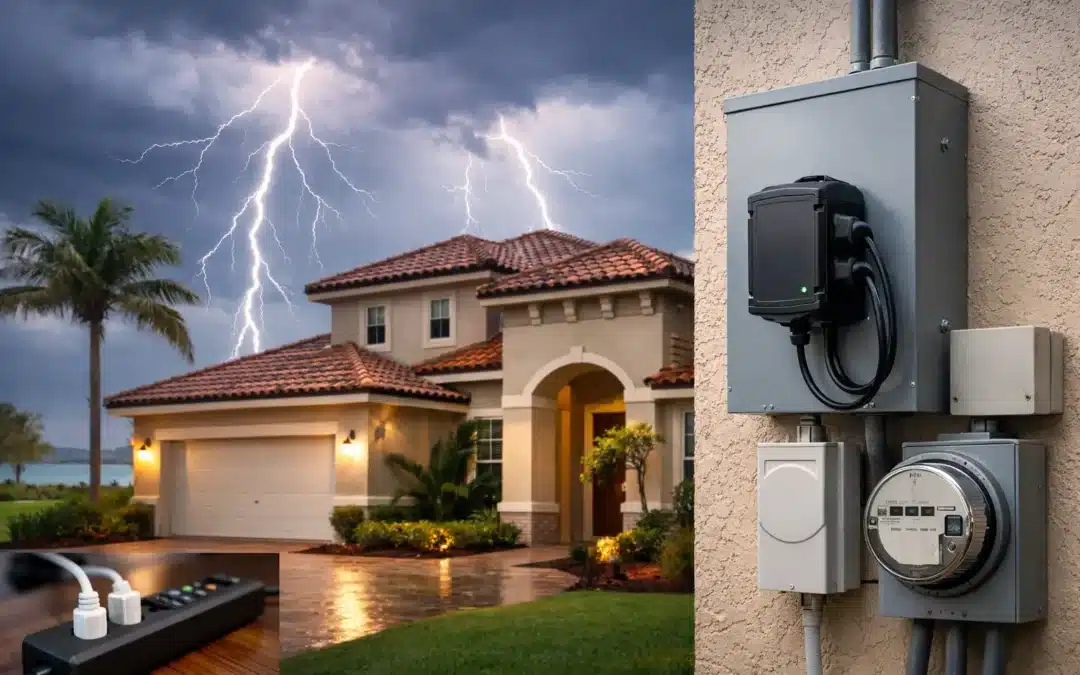
A summer storm does not need a direct lightning strike to damage your electronics. In Florida, a nearby strike, a utility event, or even large equipment cycling on and off can send excess voltage through your home’s electrical system. That is why surge protection for homes in Florida is less of a luxury upgrade and more of a practical safeguard.
Many homeowners think of surges as one dramatic event, but most surge damage is cumulative. Small, repeated voltage spikes can shorten the life of appliances, HVAC equipment, smart home devices, televisions, refrigerators, and computers. Then one larger surge finishes the job. If you have invested in a newer AC system, kitchen appliances, or home office equipment, protecting those systems makes financial sense.
Why surge protection matters more in Florida
Florida homes face a combination of conditions that make electrical protection especially important. Thunderstorms are common, lightning activity is high, and power interruptions can happen during heavy weather. On top of that, many households rely on expensive electrical equipment every day, from variable-speed air conditioners to Wi-Fi-connected devices and garage door openers.
In Southwest Florida, storm season can put extra strain on both utility infrastructure and home electrical systems. Even if the utility restores power quickly, the return of power can create a surge event. Homes with older electrical panels, aging wiring, or no dedicated surge protection are often more exposed.
There is also a comfort factor. Florida homeowners depend heavily on air conditioning for much of the year. When a surge affects an AC condenser, air handler, or thermostat, the problem is not just an inconvenience. It can turn into an urgent repair during the hottest part of the week.
What a power surge actually is
A power surge is a brief increase in voltage above the normal level your home’s electrical system is designed to handle. The spike may last only a fraction of a second, but that is enough time to damage sensitive electronics or stress motors and circuit boards.
Some surges come from outside the home. Lightning, utility switching, downed lines, and grid issues are common causes. Others start inside the house. Air conditioners, refrigerators, pool equipment, and other large appliances can create smaller internal surges when they cycle on and off.
That is an important distinction because it affects how you should protect your home. A single plug-in strip cannot defend the entire electrical system, especially when surge activity may come from multiple sources.
Surge protection for homes in Florida: what works best
For most homes, the best protection is layered protection. That means using a whole-home surge protector at the electrical panel and adding point-of-use protection where sensitive electronics are plugged in.
Whole-home surge protection
A whole-home surge protector is installed at or near the electrical panel. Its job is to intercept excess voltage and divert it safely before that surge travels deeper into the home’s circuits. This does not make your home immune to every possible electrical event, but it provides a strong first line of defense.
This type of protection is especially valuable for hardwired equipment that cannot plug into a surge strip. That includes HVAC systems, dishwashers, laundry equipment, water heaters, and sometimes pool systems. It also helps protect outlets and connected devices throughout the home.
The quality of the device matters, but so does correct installation. The surge protector needs to be matched to the panel and installed according to code. An electrician can also confirm whether the panel itself is in good enough condition to support the upgrade.
Point-of-use surge protection
Plug-in surge protectors still have an important role. They add a second layer of defense for televisions, desktop computers, gaming systems, routers, and office equipment. They are useful, but they are not a replacement for whole-home protection.
This is where homeowners sometimes get a false sense of security. A basic power strip is not the same thing as a surge protector, and even a real surge protector has limits. If your home takes a significant surge at the panel, relying only on a strip at the wall leaves too much exposed.
What surge protection does and does not do
Surge protection lowers risk. It does not promise perfect protection in every scenario. A very severe event, especially a direct lightning strike, can still cause damage. That is one reason licensed electricians talk about risk reduction rather than absolute guarantees.
It also does not solve underlying electrical problems. If your home has an outdated panel, loose connections, improper grounding, or overloaded circuits, those issues need to be addressed separately. In some cases, an electrician may recommend a panel upgrade before or along with whole-home surge protection.
That trade-off matters. Homeowners sometimes want the fastest, lowest-cost fix, and a surge protector is often affordable compared to replacing appliances or HVAC control boards. But if the electrical system has larger safety concerns, it is better to correct those first than to install protection on a shaky foundation.
Signs your home may need better surge protection
Some homes clearly need an evaluation. If you have experienced frequent breaker trips, flickering lights, damaged electronics, or power issues after storms, it is worth having your system checked. The same goes for homes with older panels or recent additions of high-value equipment.
You may also want to be proactive if you have recently installed a new air conditioner, upgraded kitchen appliances, added a home office, or purchased smart home devices. The more electronics and control boards your home depends on, the more costly surge damage can become.
For seasonal residents, there is another angle. If your home sits empty for part of the year, you may not catch a surge-related problem right away. Protection helps reduce the chance of returning to damaged systems or spoiled food from a failed refrigerator.
Why professional installation matters
Whole-home surge protection is not a DIY project. The device is tied directly into your home’s electrical system, and proper installation affects both performance and safety. A licensed electrician can determine the right type of device, inspect grounding and bonding, and make sure the installation meets code.
This is especially important in older homes and in homes that have had previous electrical work done over many years. Not every panel is in ideal condition. Sometimes a surge protection recommendation leads to the discovery of corrosion, improper wiring, or a panel that has reached the end of its service life.
Working with a professional also gives you clearer expectations. You can ask what level of protection makes sense for your home, whether your HVAC equipment should have additional protection, and whether your current panel setup supports the best solution. A company with local experience, like Infinite Electric & Air, can also factor in the weather and power conditions common in Southwest Florida.
A practical way to think about cost
Homeowners often compare the cost of surge protection to the cost of replacing one damaged device. That comparison is usually too narrow. A single surge event can affect multiple appliances and electronics at once, and some of the most expensive components are not obvious at first glance. AC boards, refrigerators, washers, dryers, microwaves, and garage door systems can all be affected.
There is also the cost of disruption. Losing cooling during a Florida heat wave or replacing electronics after a storm is rarely convenient. Surge protection is one of those upgrades that may stay invisible for years, which is exactly the point. It is there to reduce the chance of a bigger, more expensive problem.
If you are weighing whether it is worth it, start with the value of what your home depends on every day. For many Florida households, that total gets high very quickly.
When to schedule an evaluation
If your home has never had surge protection assessed, before storm season is a smart time to do it. But you do not need to wait for summer. Any time you notice electrical irregularities, replace major appliances, upgrade your HVAC system, or plan a panel update, it makes sense to ask about surge protection at the same time.
A good evaluation should be straightforward. You want to know whether your home already has any level of protection, whether the panel is in suitable condition, and what solution fits your setup and budget.
Protecting a Florida home is rarely about one dramatic fix. It is about making smart upgrades that help your electrical system handle the realities of local weather and modern living. Surge protection is one of the simplest ways to do that before the next storm gives you a reason.