
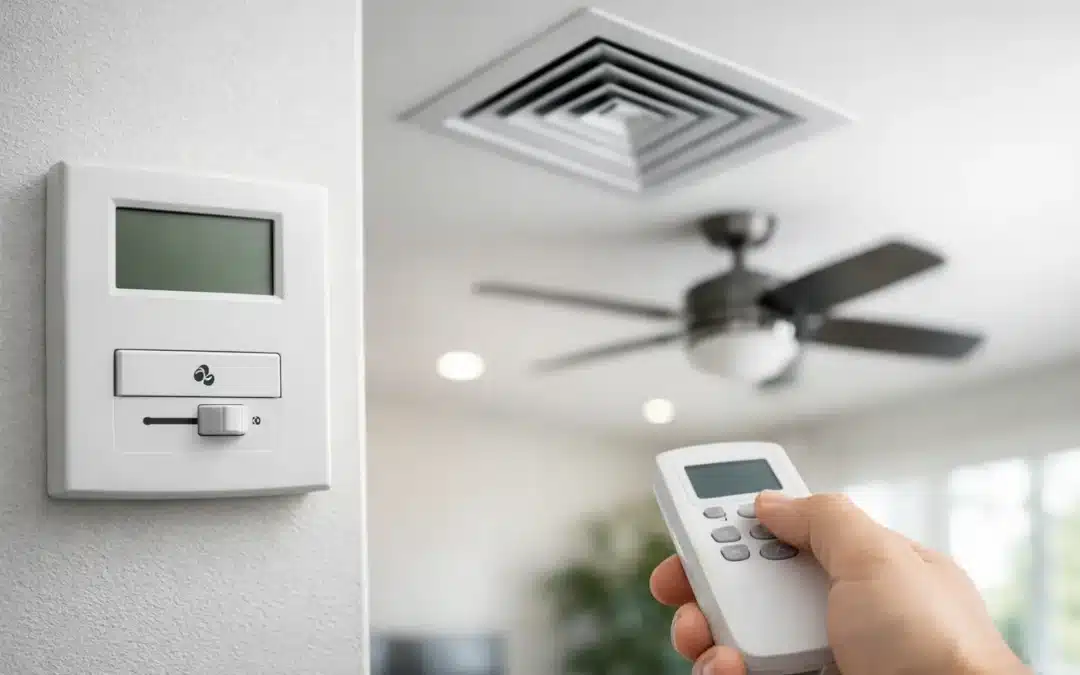
If you’ve stood at your thermostat wondering, should I run AC fan on auto, you’re asking a smarter question than it might seem. That single setting affects indoor comfort, humidity, air quality, and your monthly electric bill – especially in Southwest Florida, where your AC does far more than just cool the house.
For most homes, Auto is the better everyday setting. But that does not mean On is always wrong. The right choice depends on how your system is performing, how humid your home feels, and whether you are trying to solve a comfort problem or avoid creating a new one.
Should I run AC fan on auto for everyday use?
In most cases, yes. When the fan is set to Auto, it only runs when your air conditioner is actively cooling. That means the system cycles on, removes heat and moisture from the air, and then shuts the blower off when the cooling cycle ends.
That last part matters. In Florida’s climate, moisture control is just as important as temperature control. When the fan keeps running after the cooling cycle stops, it can move some of that moisture back into your home. Auto helps your system remove humidity and leave it out of the living space instead of re-circulating it.
Auto also uses less electricity than leaving the fan running all the time. The blower motor can add noticeable operating cost over the course of a month, particularly during long cooling seasons.
For homeowners who want a simple rule, this is it: if your AC system is working properly and your home feels comfortable, keep the fan on Auto.
What happens when the AC fan is set to On?
When the thermostat fan is set to On, the blower runs continuously, even when the air conditioner is not actively cooling. Some homeowners like this because air keeps moving through the vents, and the house may feel more evenly circulated.
There are a few situations where that can help. If you have rooms that stay warmer than others, constant airflow may reduce hot and cold spots. If you want more air passing through the filter, On can also improve circulation.
But there is a trade-off. Continuous airflow does not mean continuous cooling. It just means the fan is moving air. In humid conditions, that can make the house feel clammy, even if the thermostat says the temperature is fine. People often describe this as, “The AC is running, but it still feels sticky in here.” In many cases, the fan setting is part of the problem.
Auto vs On: the biggest difference is humidity
In dry climates, fan setting is often mostly about comfort and energy use. In Southwest Florida, humidity changes the conversation.
As your AC cools the air, it also pulls moisture out of it. That moisture collects on the evaporator coil and drains away. When the cooling cycle ends, the coil can still be wet. If the blower keeps running, some of that moisture may evaporate back into the air stream and circulate through the house again.
That is one reason many Florida homeowners feel better with the fan on Auto. The system gets a chance to dehumidify more effectively.
If your home already struggles with indoor humidity, leaving the fan on On can work against you. You may notice windows fogging slightly, a musty smell, or rooms that feel damp even though the thermostat reading looks normal. None of those are ideal for comfort, and they are certainly not ideal for your home’s overall condition.
When running the fan on On can make sense
Even though Auto is usually the better default, there are times when On has a purpose.
If your home has uneven airflow, running the fan continuously can help mix the air between rooms. That may be useful in larger homes, homes with second-story heat buildup, or layouts with long duct runs.
Some homeowners also prefer On when they want more constant air filtration. If your system uses a high-quality filter and you are dealing with dust, pet dander, or mild indoor air quality concerns, continuous fan operation can move more air through the filter.
There is also a middle ground on some modern thermostats. Certain systems allow you to schedule the fan or run it intermittently rather than all the time. That can improve circulation without the full energy and humidity drawbacks of leaving it on constantly.
Still, if you are using the On setting because parts of your house are uncomfortable, it is worth asking why. A fan setting can mask issues like duct leaks, poor airflow, low refrigerant, dirty coils, or an oversized AC system. Those problems do not go away just because the blower keeps moving air.
Energy costs: Auto is usually more efficient
Homeowners often assume the blower fan uses very little electricity. Sometimes it does, but over time, continuous operation adds up.
If the fan runs all day and night, you are paying to power that motor even when the system is not cooling. Depending on your equipment, that can mean a higher utility bill without a meaningful comfort benefit.
With Auto, the blower only runs when needed. That usually makes it the more efficient option, especially in homes where the AC already runs often during warm months.
There is another efficiency angle to consider. If the On setting makes the home feel more humid, some homeowners lower the thermostat to compensate. That can force the system to cool more often, increasing energy use even further. In other words, the fan setting can indirectly lead to higher cooling costs.
What about air quality?
This is where the answer gets a little more nuanced.
Running the fan on On can improve air circulation and pass more air through the filter, which may help with dust or stale air. But filtration only works well if the filter is the right type, the system can handle it, and the ductwork is in good shape.
If your filter is dirty, your ducts are leaking, or your system is pulling in humid attic air, more fan runtime may not improve air quality the way you hope. It can actually spread humidity and contaminants more consistently through the home.
For many households, better air quality comes from the basics: a clean filter, proper system maintenance, sealed ductwork, and controlling indoor humidity. The fan setting is only one part of that picture.
Signs Auto is the better choice for your home
If your house feels cool but damp, Auto is likely the better setting. The same goes if your electric bills seem higher than expected and the fan has been set to On.
Auto is also the safer choice if you have noticed musty odors around vents, condensation concerns, or a general sticky feeling indoors. Those are all clues that humidity control should be the priority.
For many Florida homes, the most comfortable setup is a properly maintained AC system, a clean filter, and the thermostat fan left on Auto unless there is a specific reason to change it.
If you’re still asking, should I run AC fan on auto or not?
A simple test can help. Leave the fan on Auto for a few days and pay attention to how the house feels, not just what the thermostat says. Notice the humidity, the temperature balance between rooms, and whether the system seems to run normally.
If comfort improves, that is a strong sign Auto is working in your favor. If certain rooms remain uneven or indoor air still feels stale, the issue may not be the fan setting alone.
That is when it helps to have the system evaluated by a licensed HVAC professional. In our area, comfort problems are often tied to airflow design, oversized equipment, clogged drains, dirty coils, or humidity control issues that a thermostat setting cannot fix. If you need a professional opinion, Infinite Electric & Air can inspect how your system is operating and help you choose settings that make sense for your home.
The best thermostat setting is the one that supports comfort without creating hidden problems. In a humid climate, Auto usually gives your AC the best chance to cool your home and remove moisture the way it was designed to.