
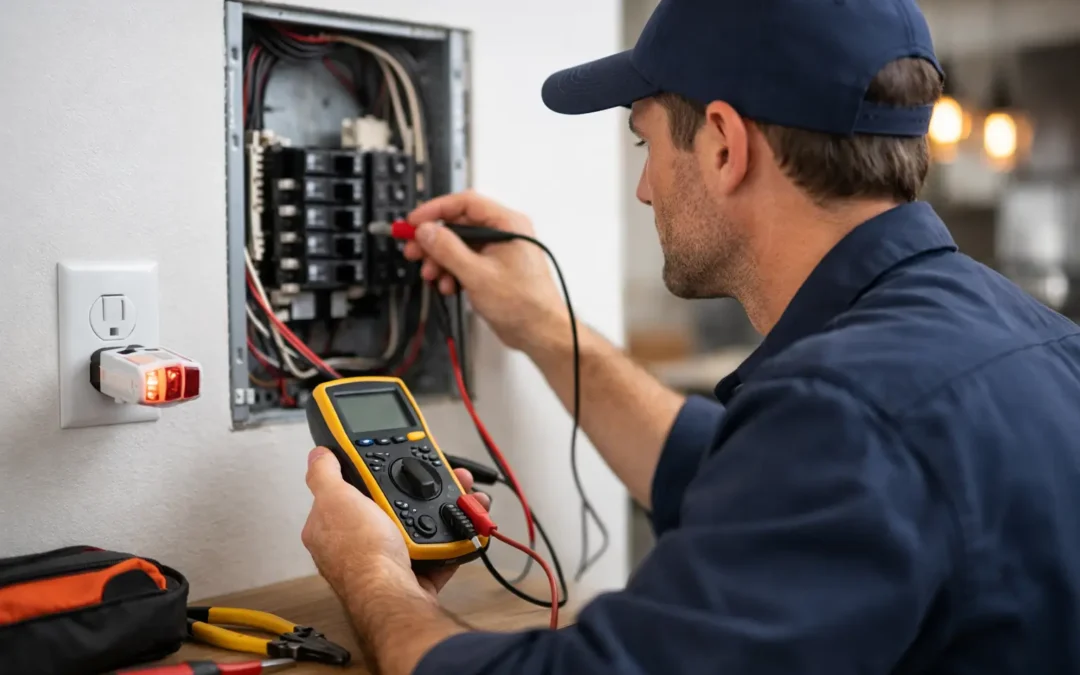
A lamp stops working, one bathroom outlet goes dead, or a breaker keeps tripping right when the microwave starts. Most homeowners do not need a full technical manual in that moment. They need the residential electrical troubleshooting guide basics – what to check first, what the issue might mean, and when it is time to stop and call a licensed electrician.
That distinction matters. Some electrical problems are minor and isolated, like a tripped GFCI outlet after moisture exposure. Others point to a larger issue, such as overloaded circuits, loose connections, aging panels, or storm-related surge damage. In Southwest Florida, weather adds another layer. Heat, humidity, and lightning can all put extra stress on a home’s electrical system.
Residential Electrical Troubleshooting Guide Basics: Start With Safety
Before checking anything, treat electricity with respect. If you smell burning, see scorch marks, hear buzzing from a panel or outlet, or notice flickering tied to multiple rooms, do not keep testing the problem. Turn off power if it is safe to do so and call a licensed electrician.
For smaller issues, begin with the least invasive checks. Ask whether the problem affects one device, one outlet, one room, or the whole home. That simple question usually narrows things down faster than guessing. If only one lamp is out, the issue may be the bulb, cord, or plug. If several outlets in one area stopped working, the problem is more likely tied to a tripped breaker or GFCI.
It also helps to think about timing. Did the issue start after a storm, after plugging in a space heater, or after using multiple kitchen appliances at once? Electrical systems often give clues through patterns.
The Most Common Electrical Problems Homeowners Notice
Breaker trips are one of the most common complaints, and they are often doing exactly what they are supposed to do. A breaker shuts off power when a circuit is overloaded or when it senses a fault. If it trips once after too many appliances are running, that may be a one-time overload. If it keeps tripping under normal use, something deeper is going on.
Dead outlets are another frequent issue. Sometimes the outlet itself has failed, but many times the cause is upstream. A tripped GFCI in a bathroom, garage, kitchen, laundry room, or exterior location can cut power to other outlets on the same circuit. Homeowners are often surprised to learn the dead outlet in one room may be controlled by a reset button in another.
Flickering lights can be simple or serious depending on the pattern. A single flickering fixture may mean a loose bulb or failing switch. Flickering across several rooms, especially when large appliances start, can point to voltage problems, poor connections, or panel issues.
Warm outlets, buzzing switches, and frequently dimming lights deserve more caution. Those symptoms can signal loose wiring or failing components. They are not good candidates for trial-and-error repairs.
What to Check First
Start with the device, not the wiring. If a lamp, charger, or toaster is not working, test it in another known-working outlet. If it still fails, the problem may be the device itself.
Next, check the electrical panel. Look for a breaker that is out of line with the others or sitting in the middle position. To reset it, turn it fully off and then back on. If it immediately trips again, stop there. Repeated resetting can make the situation worse and does not solve the underlying fault.
Then check for GFCI outlets. Press the reset button firmly. In Florida homes, moisture exposure in bathrooms, garages, lanais, and outdoor areas can trip GFCIs more often than homeowners expect.
If lights are out, try the simplest possibilities too. Test the bulb, then the switch, then nearby outlets. In some cases, a switched outlet or a tripped circuit can make a lighting issue seem more complicated than it is.
When a Tripped Breaker Means More Than an Overload
A single trip is not always a red flag. Maybe the hair dryer, iron, and bathroom heater were all running on the same circuit. That is a usage issue. The solution may be as simple as reducing what runs at the same time.
But a breaker that trips repeatedly under ordinary conditions usually points to one of three things: an overloaded circuit, a short circuit, or a ground fault. Those are not interchangeable. An overload means the circuit is being asked to carry too much. A short or ground fault means electricity is taking an unintended path, which raises the safety risk.
Older homes can be more vulnerable here, especially if the electrical panel was designed for lighter household demand. Modern life puts more strain on circuits than many older systems were built to handle. If your panel is crowded, breakers trip often, or major appliances cause lights to dim, a licensed electrician should evaluate the system as a whole instead of treating each symptom separately.
Understanding GFCI and AFCI Trips
Part of any residential electrical troubleshooting guide basics is knowing what protective devices do. GFCI outlets and breakers are designed to reduce shock risk, especially around water. AFCI breakers help protect against arc faults, which can be caused by damaged wires or loose connections.
A GFCI trip after heavy rain, outdoor use, or moisture exposure may be doing its job. If it resets and stays on, that may be the end of it. If it keeps tripping, there could be moisture intrusion, a worn outlet, or a problem with something plugged into the circuit.
AFCI trips can be harder for homeowners to interpret. Sometimes they respond to a legitimate wiring issue. Other times they react to a problematic appliance or even nuisance conditions. Either way, repeated AFCI trips deserve professional diagnosis, especially if they involve bedroom circuits or newer code-protected areas.
Signs You Should Not Ignore
Some symptoms should move the issue out of DIY territory right away. A burning smell from an outlet or panel is one. Another is discoloration around receptacles or switches. Buzzing sounds, visible sparking, and outlets that feel hot to the touch also fall into this category.
You should also take note if lights brighten and dim unpredictably, especially when the air conditioner turns on. In Southwest Florida, cooling systems carry a heavy load for much of the year. If that startup demand causes house-wide electrical symptoms, the issue may involve circuit capacity, panel condition, or service connections.
Storm season adds one more concern. After lightning activity or power fluctuations, watch for electronics that stop working, breakers that behave strangely, or GFCIs that will not reset. Surge damage is not always dramatic. Sometimes it shows up later as intermittent failures.
What Homeowners Can Safely Do – and What They Should Leave Alone
There is a middle ground between ignoring a problem and trying to repair wiring without training. Homeowners can safely replace light bulbs, test devices in other outlets, reset breakers once, and reset accessible GFCIs. They can also make useful observations, like noting when the problem happens and what else is running at the time.
What they should not do is remove panel covers, replace breakers without proper knowledge, open junction boxes, or keep forcing a breaker back on. Electrical troubleshooting is not just about finding the problem. It is about understanding the risk behind the symptom.
That is where licensed service matters. A trained electrician can test voltage, inspect connections, evaluate panel capacity, and identify whether the issue is isolated or systemic. That kind of diagnosis is especially valuable when problems seem random, because random electrical issues usually are not random at all.
When It Makes Sense to Call a Professional
If the issue involves repeated breaker trips, warm outlets, flickering in multiple rooms, storm-related concerns, or any sign of burning or buzzing, call a professional. If your home still has an older panel, limited outlet capacity, or circuits that never seem to meet your needs, it is also worth having the system evaluated proactively.
For homeowners in places like Cape Coral, Fort Myers, and North Fort Myers, weather stress is part of the equation. Heat, humidity, and storms create conditions where weak points in an electrical system show up faster. A professional inspection can help catch those weak points before they become a larger repair or a safety hazard.
At Infinite Electric & Air, the goal is not just to restore power. It is to find the real cause, explain it clearly, and recommend the right fix with transparent pricing and safety in mind. That approach saves homeowners from repeat problems and unnecessary guesswork.
A good troubleshooting mindset is simple: start small, stay cautious, and pay attention to patterns. If the problem is minor, that process often reveals it quickly. If it is not minor, recognizing the warning signs early is one of the best ways to protect your home and everyone in it.