
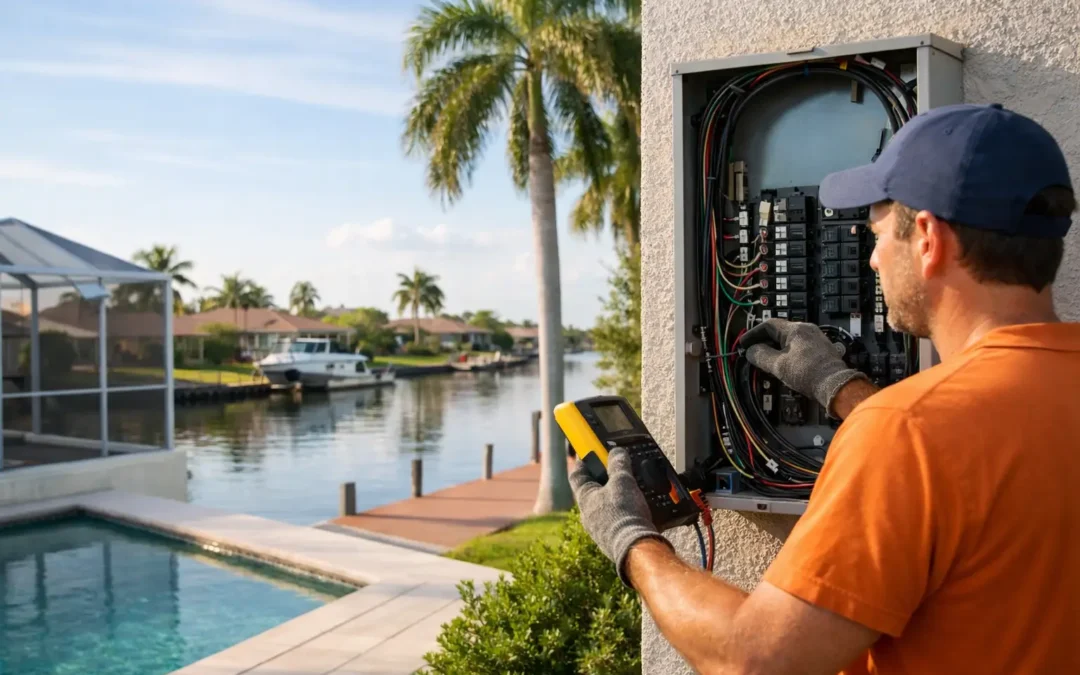
If your lights dim when the AC kicks on, breakers trip during normal use, or your panel still feels stuck in another decade, it may be time to take a closer look. Electrical panel upgrades in Cape Coral are not just about adding capacity. They are often about protecting your home, keeping up with modern electrical demand, and making sure your system can handle Southwest Florida conditions.
For many homeowners, the panel is easy to ignore because it sits quietly in the garage, utility room, or outside wall until something goes wrong. But your panel is the control center for the entire electrical system. When it is outdated, undersized, damaged, or improperly installed, the problems show up everywhere else in the house.
Why panel upgrades matter more in Florida
Cape Coral homes deal with a mix of electrical stress that is hard on older systems. Air conditioners run long hours, pool equipment adds demand, and summer storms can bring power surges and outages. Add in newer appliances, EV chargers, home offices, and larger entertainment systems, and many older panels are simply doing more than they were designed to do.
That does not mean every home needs a full replacement. Sometimes a homeowner needs more circuits, a capacity increase, or correction of code and safety issues. In other cases, the panel itself is the problem, especially if it shows signs of overheating, corrosion, loose connections, or manufacturer-related defects.
A properly sized and professionally installed panel helps your home run more safely and more reliably. It can also make future projects easier, whether you are planning a generator connection, surge protection, a kitchen remodel, or a garage conversion.
Signs you may need electrical panel upgrades in Cape Coral
Some warning signs are obvious. Others are easy to brush off until they become expensive or dangerous. If your breakers trip regularly, that is not a normal inconvenience to live with. It is your system telling you something is overloaded, failing, or wired incorrectly.
Flickering lights are another common clue, especially when they happen during startup of major appliances like the AC or dryer. A panel that feels warm, smells burnt, makes crackling sounds, or shows rust should be inspected right away. Those symptoms can point to serious internal issues.
Age also matters. Many older homes were built for a much lower electrical load than what most families use now. A panel that was acceptable decades ago may not be capable of safely supporting today’s usage. If you are adding a hot tub, upgrading your HVAC system, installing a tankless water heater, or preparing for an EV charger, your existing panel may no longer be enough.
It is also common for homeowners to discover panel issues during a renovation, home purchase, or insurance review. Some insurers pay close attention to outdated equipment and certain discontinued panel brands. In those situations, upgrading can improve not just performance, but insurability and peace of mind.
What a panel upgrade actually includes
A panel upgrade is not always the same job from one home to the next. Sometimes it means replacing an aging breaker box with a new panel of the same amperage because the existing equipment is unsafe or unreliable. Sometimes it means increasing service capacity, such as moving from 100 amps to 150 or 200 amps, so the home can support more electrical load.
The work may also include replacing breakers, improving grounding and bonding, updating the meter connection, correcting wiring defects, and making sure the system meets current code requirements. In homes with storm-related concerns, many electricians also recommend whole-home surge protection as part of the upgrade. That is especially relevant in this part of Florida, where lightning and grid disturbances are a real concern.
A good electrician does not start with a one-size-fits-all answer. The right upgrade depends on the age of the home, your current usage, future plans, the condition of existing wiring, and whether other parts of the system also need attention.
How to know whether you need repair or replacement
This is where experience matters. Not every panel problem requires a full upgrade, and not every quick fix is a smart long-term decision. If the issue is limited to a bad breaker, a loose connection, or a small wiring problem, a targeted repair may solve it.
But if the panel is outdated, undersized, corroded, or showing repeated signs of failure, replacing it is often the safer and more cost-effective path. Homeowners sometimes hesitate because they assume an upgrade is purely preventative. In reality, waiting can mean higher risk of equipment damage, nuisance outages, or a more serious electrical hazard.
There is also a practical side to the decision. If you know you will soon add major electrical loads, replacing the panel now may prevent paying twice. It is usually better to plan around your future needs than to squeeze temporary fixes out of equipment that has already reached its limit.
The process homeowners can expect
A professional panel upgrade starts with an evaluation of your current electrical service and the home’s load requirements. The electrician should look at the panel condition, breaker performance, wiring, grounding, and any plans you have for new equipment or additions.
From there, you should receive clear recommendations and transparent pricing. That matters because panel work is not a cosmetic project. It is a safety project, and homeowners deserve to know exactly what is being replaced, what is being brought up to code, and why.
Once the scope is confirmed, permits and inspections are typically part of the process. There is usually a scheduled power shutoff while the old panel is removed and the new equipment is installed. In many homes, the outage is manageable within the same day, though the exact timing depends on the complexity of the work and utility coordination.
After installation, the system should be tested thoroughly, labeled clearly, and left in a condition that makes future service straightforward. If your electrician rushes through that final step, it is a red flag. A panel upgrade should leave your home safer, easier to manage, and ready for what comes next.
Choosing the right size and setup
Many homeowners ask whether 200-amp service is necessary. Sometimes yes, sometimes no. The answer depends on your actual and projected electrical load. A smaller home with gas appliances may not need the same capacity as a large all-electric home with a pool, upgraded HVAC, and EV charging.
That is why load calculations matter. Oversizing for no reason can add cost. Undersizing creates frustration and can limit future upgrades. The best choice is based on how your home operates now and how you expect it to operate over the next several years.
Setup matters too. Space for additional circuits, compatibility with generator connections, and room for surge protection can all shape the final recommendation. In storm-prone areas, planning for resilience is part of smart electrical design, not an extra luxury.
Why local experience makes a difference
Electrical work should always be done by a licensed professional, but local experience adds another layer of value. Homes in Southwest Florida are exposed to heat, humidity, salt air, and frequent storm activity. Those conditions affect equipment lifespan, corrosion risk, and surge exposure.
An electrician familiar with Cape Coral homes is more likely to spot the patterns that matter here, from outdoor panel wear to load demands driven by cooling systems and pool equipment. They can also help homeowners think beyond the immediate repair and plan for issues common to the region.
That practical knowledge is part of what makes a panel upgrade worthwhile when it is done correctly. You are not just replacing a box on the wall. You are improving the safety and reliability of one of the most important systems in your home.
When it makes sense to schedule an inspection
If your home is older, your electrical demand has grown, or your panel is showing even mild warning signs, it is worth having it evaluated before the next failure forces the issue. The same is true if you are planning a remodel, adding a major appliance, or dealing with unexplained tripping and flickering.
At Infinite Electric & Air, panel evaluations are approached with the same priorities homeowners care about most: safety, clear communication, and honest recommendations. Some homes need a full upgrade. Some need a targeted fix. The key is knowing the difference before a small electrical problem turns into a bigger one.
A reliable electrical system should not make you guess, reset breakers every week, or wonder whether your home can handle the next storm. If your panel is showing its age, now is a good time to have it looked at and make a plan that fits your home.