
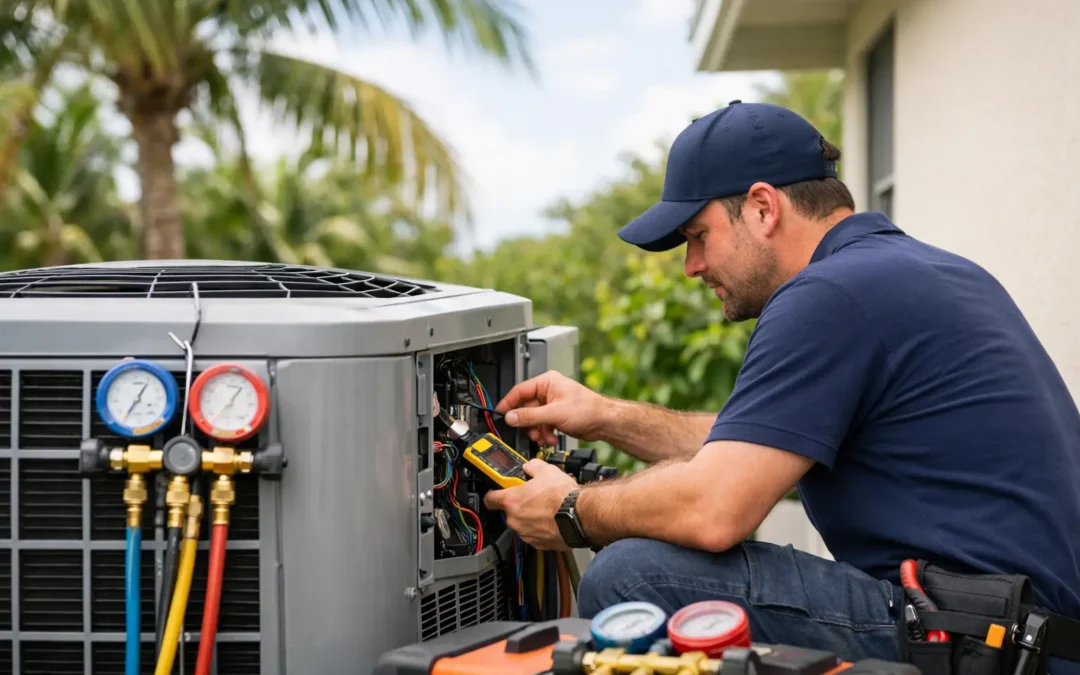
When your AC starts struggling in the middle of a Florida afternoon, it rarely feels like a small problem. A warm bedroom, weak airflow, or a system that runs nonstop can quickly turn into higher electric bills, humidity issues, and real discomfort. These air conditioning repair tips for Florida homeowners are meant to help you spot common problems early, know what you can safely check yourself, and understand when a licensed technician should take over.
Why AC problems hit harder in Florida
In Southwest Florida, air conditioners do more than cool the house. They also remove moisture from the air, which is a big part of keeping your home comfortable and protecting it from that sticky indoor feeling. When the system is off, oversized, low on airflow, or dealing with a mechanical issue, you may notice humidity climbing before the indoor temperature becomes unbearable.
That matters because Florida systems work long, hard hours for much of the year. Salt air, heavy rain, intense heat, and storm-related power issues can all add stress. A repair that might seem minor in a milder climate can create bigger comfort and efficiency problems here.
Air conditioning repair tips for Florida homeowners: start with the basics
Before assuming you need a major repair, check the simple issues first. Homeowners can often rule out a few common problems without taking apart equipment or risking damage.
Check the thermostat settings
It sounds obvious, but it is worth confirming. Make sure the thermostat is set to cool and that the temperature is lower than the current room temperature. If the display is blank or acting strangely, the batteries may need to be replaced.
If your thermostat recently lost power after a storm or brief outage, it may also need to be reset. In some homes, programming errors can cause the system to cycle at odd times or fail to keep the set temperature.
Look at the air filter
A dirty filter is one of the most common reasons an AC starts underperforming. Restricted airflow can lead to weak cooling, longer run times, frozen evaporator coils, and extra wear on the system.
In Florida homes, especially those with pets, frequent visitors, renovation dust, or high seasonal use, the filter may need attention more often than expected. If it looks clogged, replace it with the correct size and rating recommended for your system. A filter that is too restrictive can also create airflow problems, so more expensive does not always mean better.
Check the breaker, but don’t keep resetting it
If the AC will not turn on at all, inspect the electrical panel for a tripped breaker. Resetting it once may restore service. If it trips again, stop there. Repeated breaker trips can point to an electrical fault, compressor issue, or failing component that needs professional diagnosis.
That is especially true after lightning activity or power fluctuations, which Florida homeowners know can happen fast during storm season.
What weak airflow usually means
If the AC is running but certain rooms feel warm or the vents barely push air, airflow is the problem to investigate first. Weak airflow is not always an expensive repair, but it should not be ignored.
A clogged filter is the simplest cause. Beyond that, you may be dealing with blocked return vents, dirty evaporator coils, leaking ductwork, or a blower motor issue. In some homes, closed interior doors and furniture placement can also affect air circulation more than people realize.
If only one or two rooms are uncomfortable, the issue may be local to a branch duct or vent. If the whole house feels undercooled, the problem is more likely at the air handler, filter, coil, or main duct system.
If your AC is blowing warm air
Warm air from the vents does not always mean the outdoor unit has completely failed, but it does mean something is wrong. First, check that the thermostat has not been switched to fan mode. When the fan runs without cooling, it will still move air through the house, just not chilled air.
Next, go outside and look at the condenser. If the outdoor unit is not running while the indoor unit is, you could be dealing with a capacitor problem, contactor issue, electrical fault, or compressor failure. If the system is running but not cooling, low refrigerant, coil issues, or airflow restrictions may be involved.
Do not try to handle refrigerant yourself. That repair requires proper tools, certification, and diagnosis. Low refrigerant is also not a normal maintenance item in a sealed system. If levels are low, there is usually a leak that should be found and repaired.
When frozen coils are the real issue
A Florida homeowner may think the AC is working hard because it is hot outside, when the actual problem is a frozen evaporator coil. Signs include weak airflow, warm air, water around the indoor unit, or the system running constantly without cooling the house.
Frozen coils usually happen because of airflow problems or refrigerant issues. Turning the system off and switching the fan to on can help thaw the coil, but that is only a temporary step. If you restart the unit without fixing the cause, it will likely freeze again.
This is a good example of where timing matters. The longer the system runs under strain, the more likely you are to see added wear on other parts.
Strange sounds are usually an early warning
Air conditioners are not silent, but they should be predictable. A sudden buzzing, rattling, squealing, banging, or clicking sound deserves attention.
Rattling can point to loose hardware or debris in the unit. Buzzing may involve electrical components. Squealing often relates to the blower motor. Banging can signal a more serious issue with internal components. Clicking during startup and shutdown can be normal, but repeated clicking without proper operation often is not.
If the sound is new and persistent, turn the system off and schedule a professional inspection. Catching a worn part early can prevent a larger repair later.
Florida humidity is part of the diagnosis
One of the most overlooked air conditioning repair tips for Florida homes is to pay attention to humidity, not just temperature. If the home feels clammy, windows are fogging, or sheets and towels feel damp indoors, your AC may not be dehumidifying correctly.
That can happen when the unit is oversized, short cycling, low on airflow, or dealing with control issues. Sometimes homeowners focus on the thermostat reading and miss the real comfort problem. A house at 74 degrees can still feel uncomfortable if indoor humidity is too high.
This is where an accurate diagnosis matters. The right repair depends on whether the issue is mechanical, airflow-related, or tied to system sizing and performance.
What you should not do yourself
There is value in checking simple items, but some repairs should stay off the DIY list. Electrical testing, capacitor replacement, refrigerant work, compressor diagnosis, and opening sealed components all carry safety and equipment risks.
Florida homes also deal with surge exposure and storm conditions that can complicate HVAC issues. What looks like a simple no-cool call can involve both electrical and mechanical systems. A licensed technician can test safely, verify what failed, and make sure one problem is not masking another.
When to call for professional AC repair
If your system is short cycling, leaking, freezing up, tripping breakers, blowing warm air, or making unusual noises, it is time to schedule service. The same goes for rooms that never cool properly or a sudden spike in your electric bill without a clear reason.
It also makes sense to call before a complete breakdown. In many cases, homeowners notice small signs for days or weeks before the system stops working. Addressing those warning signs early is usually easier on both the equipment and the budget.
For homeowners in North Fort Myers, Cape Coral, Fort Myers, and nearby Southwest Florida communities, working with a local team matters because regional conditions affect how systems wear out and how repairs should be approached. At Infinite Electric & Air, that local experience is part of helping homeowners get clear answers, safe repairs, and transparent pricing.
The best way to avoid emergency repairs
Most AC emergencies start as smaller performance issues. Replacing filters on time, keeping the area around the outdoor unit clear, paying attention to humidity changes, and scheduling routine maintenance can prevent a lot of mid-season breakdowns.
Maintenance is not a guarantee against repairs, because parts still wear out and weather still creates stress. But it does improve your odds of finding weak components early, cleaning buildup that hurts performance, and keeping the system efficient during the months when you need it most.
If your AC seems off, trust that instinct. Florida homes do not give you much room to wait and see when cooling starts slipping. A quick check now can save you from a much hotter and more expensive problem later.