If your air conditioner seems to run all day in a Southwest Florida summer, that is not unusual. What matters is whether it is running efficiently, controlling humidity properly, and avoiding the kind of wear that leads to expensive breakdowns. This advanced HVAC systems maintenance guide is built for homeowners who want more than basic filter reminders. It is for people who want to understand how to protect comfort, energy performance, and equipment life in a climate that pushes HVAC systems hard.
A modern residential HVAC system is not just a condenser and a thermostat. It is a connected system of airflow, refrigerant movement, electrical controls, drainage, insulation, and calibration. When one part falls out of spec, the rest of the system has to work harder. That is why advanced maintenance goes beyond changing filters and spraying off the outdoor unit.
What advanced HVAC maintenance really means
Routine maintenance covers the basics. Advanced maintenance looks at how the system performs under load and whether each component is supporting safe, efficient operation. That includes checking electrical connections, blower performance, static pressure, condensate management, thermostat accuracy, refrigerant charge, coil condition, and signs of early component failure.
For homeowners, the value is simple. You catch small problems before they become emergency repairs. You also get a more comfortable home. In Florida, that often means better humidity control, fewer hot spots, and less strain during long cooling cycles.
There is also a difference between a system that turns on and a system that operates correctly. An AC unit can cool the house while still short cycling, pulling too many amps, draining poorly, or moving the wrong amount of air. Those issues may not be obvious until utility bills rise or parts start failing.
The components that deserve closer attention
Airflow is often the hidden problem
Airflow issues are one of the most common reasons a system underperforms. A clogged filter is the obvious example, but advanced maintenance goes further by evaluating blower speed, duct restrictions, return air design, and evaporator coil condition.
Low airflow can cause poor cooling, frozen coils, and high humidity indoors. Too much airflow can reduce dehumidification, which matters in our region where comfort is tied closely to moisture control. The right airflow depends on the equipment and the home, so there is not a single setting that works for every house.
Coils need more than a quick rinse
Both evaporator and condenser coils need to transfer heat effectively. Dirt, biological growth, and corrosion reduce that ability. In coastal and high-humidity areas, coil deterioration can happen faster than homeowners expect.
Outdoor coils may look clean from the outside while still holding debris deeper in the fins. Indoor evaporator coils are even easier to overlook because they are out of sight. If either coil is compromised, the system loses efficiency and parts are forced to work longer and harder.
Electrical health matters for HVAC too
Your HVAC system depends on capacitors, contactors, relays, boards, motors, and safe electrical connections. Loose or corroded connections create heat and can shorten equipment life. Weak capacitors may still allow a unit to start while quietly increasing stress on the compressor or fan motor.
This is where professional inspection matters. Electrical wear is not always visible to a homeowner, and it is one of the areas where safety and equipment protection overlap.
Condensate drainage is a Florida priority
When your system runs for long periods, it removes a great deal of humidity from the air. That moisture has to drain away properly. If the condensate line begins to clog, you can end up with water damage, microbial growth, or a system shutdown if a safety switch is triggered.
Advanced maintenance includes checking the drain line, drain pan, slope, and float switch operation. For many Florida homes, this is not a minor detail. It is basic protection against indoor water issues.
Advanced HVAC systems maintenance guide for Florida homes
In a mild climate, a homeowner might get away with less frequent attention. In Southwest Florida, systems run longer, humidity stays high, and storms can affect both HVAC and electrical performance. That changes the maintenance picture.
Salt exposure in some areas can accelerate corrosion on outdoor components. Heavy rain and storm activity can create power quality issues. Long cooling seasons mean more wear on motors, capacitors, contactors, and drain components. Even homes that seem to cool fine can have hidden issues building over time.
Because of that, advanced maintenance should be preventative, not reactive. Waiting until the house feels warm usually means the system has been struggling for a while.
What homeowners can do between service visits
There are useful maintenance steps homeowners can handle safely without opening panels or working around energized components. The first is staying consistent with filter changes. The correct interval depends on filter type, pets, occupancy, and how often the system runs, but many homes need more frequent changes than expected during peak season.
Keep supply and return vents open and unobstructed. Closing vents in unused rooms sounds efficient, but it can disrupt airflow balance and increase system pressure. Also take a look at the outdoor unit. Keep vegetation trimmed back, remove visible debris, and make sure the unit has room to breathe.
Pay attention to early warning signs. Musty smells, longer run times, uneven cooling, higher indoor humidity, rattling, buzzing, or water near the air handler all deserve attention. Small changes in performance often show up before a full breakdown.
Your thermostat settings also matter. Constant, dramatic temperature changes can increase system strain, especially if the equipment has to pull indoor conditions back down during extreme afternoon heat. A steady, realistic setting is usually better for both comfort and system operation.
When professional maintenance becomes essential
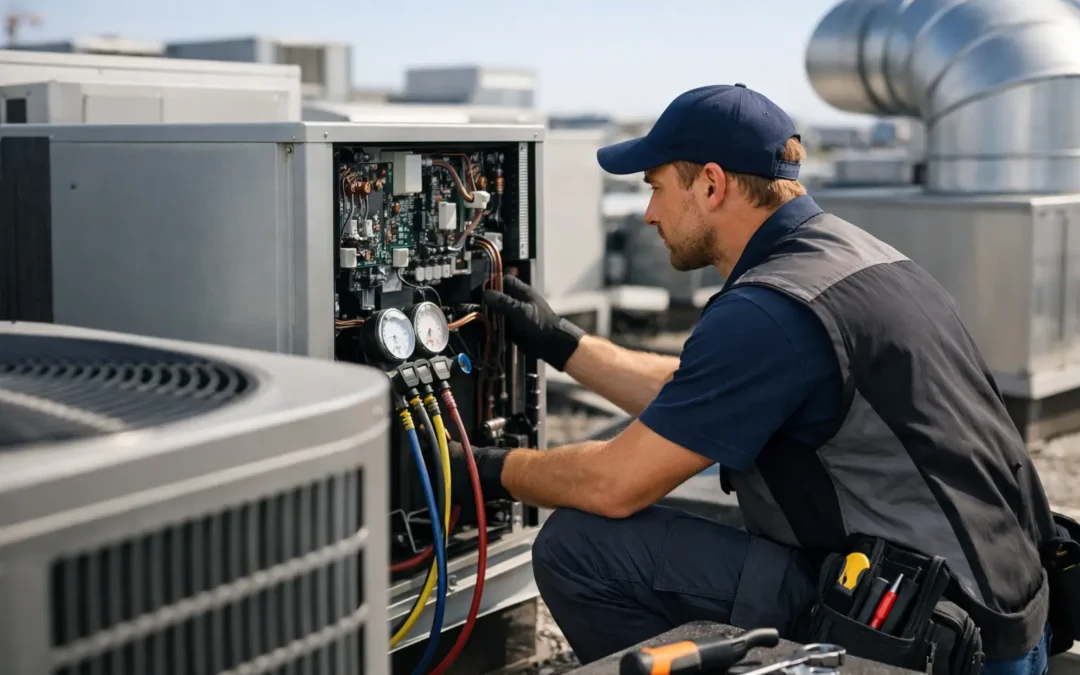
Some tasks should always be left to licensed professionals. Refrigerant checks, electrical testing, motor diagnostics, drain safety verification, static pressure evaluation, and coil inspection all require proper tools and training.
This is especially true with advanced systems that include variable-speed components, smart thermostats, zoning, or enhanced indoor air quality accessories. These systems can deliver excellent comfort and efficiency, but only when setup and maintenance are done correctly. A small calibration issue can affect the whole system.
Professional service is also where homeowners get the most accurate picture of equipment condition. A trained technician can spot a failing capacitor, a weak blower motor, duct leakage concerns, or an early coil problem before it turns into a no-cooling call in the middle of summer.
How often advanced HVAC maintenance should happen
For most homes in this area, twice-yearly service is the practical standard. One visit before peak cooling season helps prepare the system for heavy demand. Another visit later in the year helps catch wear, drainage issues, and electrical component stress after months of operation.
That said, it depends on the home and the equipment. Older systems, homes with pets, high-occupancy households, and houses with persistent humidity concerns may benefit from closer attention. Newer high-efficiency systems can also need more specialized maintenance, not less, because proper operation depends on accurate settings and clean components.
If your system has already had repeated repairs, maintenance becomes even more valuable. At that point, the goal is not just preserving efficiency. It is deciding whether continued repair makes sense or whether replacement planning would better protect your budget.
Choosing maintenance that actually protects your system
Not all maintenance visits are equally thorough. A quick visual check and filter swap is not the same as a detailed performance-focused service. Homeowners should expect more than a cursory inspection, especially in a climate where AC is essential, not optional.
A quality maintenance visit should include electrical checks, coil evaluation, drain inspection, thermostat verification, airflow-related observations, and clear communication about any concerns found. Transparent pricing matters here too. You should know what is preventative maintenance, what is a current repair need, and what can be monitored over time.
If you are looking for service from a local team that understands the demands Florida weather puts on home systems, Infinite Electric & Air provides HVAC support designed around safety, reliability, and honest recommendations. You can learn more at https://infinitefl.com/.
The best maintenance plan is the one that matches how your home actually lives – how often the system runs, how well it controls humidity, and how much strain the weather puts on the equipment. A little attention at the right time can save you from the kind of breakdown that never seems to happen on a convenient day.