
The first 90-degree day in Southwest Florida has a way of exposing every AC problem at once. A system that seemed fine in winter suddenly runs longer, cools unevenly, or struggles to keep up by late afternoon. That is exactly why an AC tune up guide for spring matters – it gives homeowners a chance to catch wear, airflow problems, and efficiency issues before summer demand puts real stress on the system.
Spring is the best window for air conditioning maintenance because your system is not yet working at full seasonal load. Parts can be inspected before they fail under pressure, filters can be changed before airflow drops, and refrigerant or electrical concerns can be addressed while scheduling is still more flexible than it will be in peak summer. In Florida, that timing matters even more. Your AC is not a luxury item for a few hot weeks. It is one of the hardest-working systems in the house for much of the year.
Why an AC tune up for spring pays off
A spring tune-up is not just about preventing breakdowns, although that is a major benefit. It also helps your system run more efficiently, which can reduce strain on components and keep utility costs from creeping up. When an AC unit is dirty, slightly out of calibration, or dealing with restricted airflow, it often still runs – just not very well. Homeowners may notice longer run times, rooms that never quite reach the thermostat setting, or higher bills without any obvious reason.
A tune-up can also improve indoor comfort in ways people do not always connect to maintenance. Weak airflow, clogged drain lines, dirty coils, and thermostat issues can all affect humidity control. In a climate like ours, that matters almost as much as temperature. A house that is technically cool but still feels damp is usually telling you the system needs attention.
AC tune up guide for spring: what homeowners can do first
There are a few simple maintenance steps homeowners can handle safely on their own. These basic checks help your system breathe better and can make it easier to spot when a professional visit is needed.
Start with the air filter
If you only do one thing this spring, check the air filter. A clogged filter restricts airflow, forces the system to work harder, and can contribute to frozen coils or uneven cooling. In many homes, filters should be checked monthly and replaced based on use, pets, indoor air quality concerns, and filter type.
A higher-priced filter is not always better. Some very dense filters can restrict airflow if your system was not designed for them. The goal is a filter that balances air cleaning with proper system performance. If you are not sure what rating is right for your unit, that is a good question to ask during maintenance.
Clear the outdoor unit
Your condenser needs space around it to release heat. Leaves, grass clippings, mulch, and overgrown landscaping can all interfere with airflow. Gently clear away debris and make sure there is open space around the unit. If the exterior looks dirty, a light rinse with a garden hose can help, but do not use a pressure washer. High pressure can bend the fins and create a bigger problem.
If the unit sits near areas where lawn crews work regularly, spring is also a good time to check for damage from equipment or compacted debris around the base.
Check the thermostat settings
Make sure the thermostat is set to cooling mode and reading accurately. If the house feels warmer than the setting suggests, the issue could be the thermostat, poor airflow, or the AC itself. If you have a programmable or smart thermostat, review the schedule before temperatures spike. It sounds simple, but many comfort complaints start with settings that no longer match the household’s routine.
Look at vents and returns
Walk through the house and make sure supply vents are open and not blocked by furniture, rugs, or drapes. Return grilles should also be clear. Closed vents do not usually save money the way people expect. In many systems, they can throw off airflow balance and add strain.
What professional spring AC maintenance should include
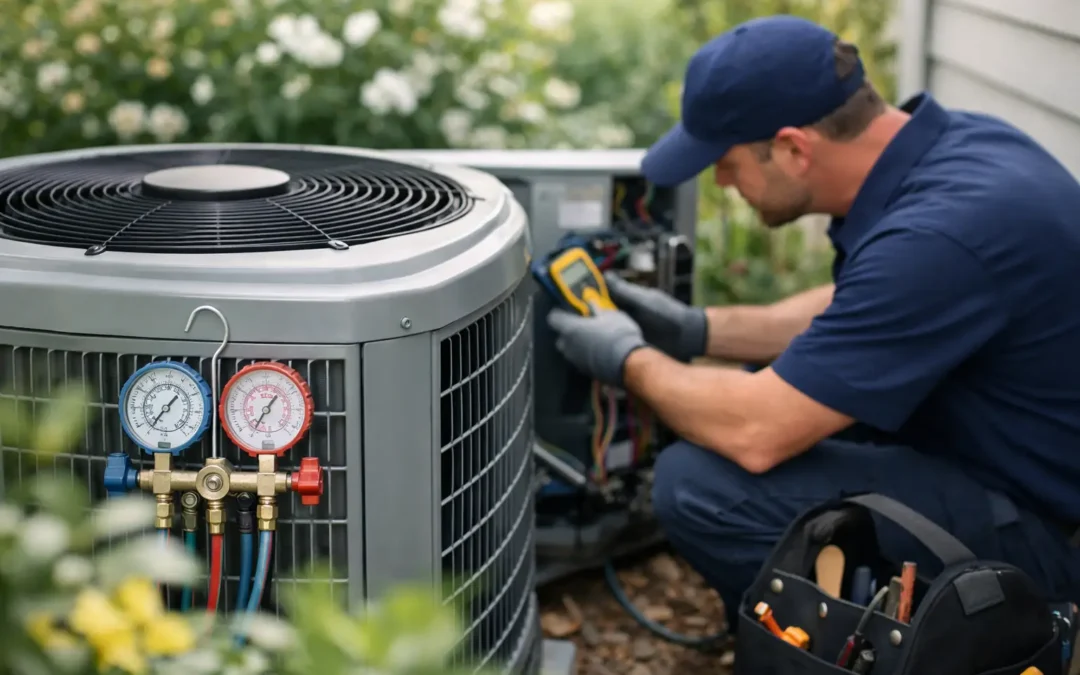
A proper tune-up goes beyond a quick visual check. This is where a licensed HVAC professional can catch issues that are easy to miss but expensive to ignore.
Electrical and safety checks
Your air conditioner relies on electrical components that wear over time. Capacitors weaken, contactors pit, wires loosen, and connections can overheat. A spring inspection should include testing key electrical components and confirming the system is operating safely.
This matters for performance, but also for reliability. Many no-cool calls in summer trace back to small electrical parts that were already showing signs of wear weeks earlier.
Coil cleaning and airflow evaluation
Indoor and outdoor coils are critical to heat transfer. When they collect dirt, the system becomes less efficient and can struggle to cool properly. Technicians should evaluate coil condition, blower performance, and overall airflow. If airflow is low, the cause may be a dirty filter, blower issue, duct leakage, or another restriction.
This is one of those areas where it depends. Two homes can have the same temperature complaint but very different causes. That is why a tune-up should focus on system performance, not just surface cleaning.
Condensate drain inspection
In Florida, condensate drain lines deserve serious attention. Your AC removes a lot of moisture from the air, and that water has to go somewhere. If the drain line clogs, it can trigger a system shutdown or lead to water damage around the air handler.
A spring tune-up should include checking and clearing the condensate drain line if needed. This is a small maintenance task that can prevent a surprisingly disruptive problem.
Refrigerant and cooling performance check
Low refrigerant does not just happen on its own. If levels are low, there is typically a leak or an installation issue that needs attention. A technician should verify cooling performance and check whether the system is operating within manufacturer specifications.
More refrigerant is not a routine spring service like topping off windshield fluid. If a system needs refrigerant, the reason should be identified. That is one reason professional maintenance is worth it – shortcuts in this area often lead to repeat problems.
Signs your AC needs more than a tune-up
A tune-up is preventive maintenance, not a cure-all. If your system is already showing significant warning signs, it may need repair instead of routine service.
Watch for weak airflow, warm air from vents, short cycling, unusual noises, musty smells, ice on the refrigerant lines, or sudden spikes in energy use. Age also matters. If your system is over 10 to 15 years old and struggling each cooling season, a tune-up may help in the short term, but it may not change the bigger picture.
That does not always mean replacement is the only answer. Sometimes a repair and maintenance visit can buy meaningful time. Other times, repeated service costs and poor efficiency make replacement the smarter investment. A trustworthy contractor should explain both sides clearly, including the trade-offs.
Why spring timing matters in Southwest Florida
In cooler parts of the country, homeowners can sometimes wait until early summer and still be fine. Here, that margin is smaller. By the time the weather turns consistently hot, AC companies are already handling more urgent repair calls, and a minor issue can become a same-day comfort problem.
Spring service gives you a better chance to schedule maintenance on your terms instead of reacting during a heat wave. It also helps ensure your system is ready for heavy runtime, high humidity, and the general wear that comes with a long cooling season. For homeowners in places like Cape Coral, Fort Myers, and North Fort Myers, that preparation is practical, not excessive.
Choosing the right help for your spring AC tune-up
Not all tune-ups are equal. Homeowners should look for licensed, experienced professionals who inspect the full system, explain findings clearly, and provide transparent pricing. A rushed appointment that changes a filter and leaves is not the same as maintenance that actually protects your equipment.
It also helps to work with a company that understands local conditions. Florida homes face long cooling seasons, salt air in some areas, storm-related power concerns, and humidity that can expose drainage and airflow problems quickly. Local experience makes a difference in what gets checked and what gets flagged early.
If you want your AC looked at before summer settles in, Infinite Electric & Air offers professional HVAC service for homeowners who want reliable cooling without surprises. The best time to schedule is before your system gives you a reason to.
A spring tune-up will not make an aging system brand new, but it can make your home more comfortable, your cooling more dependable, and your summer a lot less stressful.