
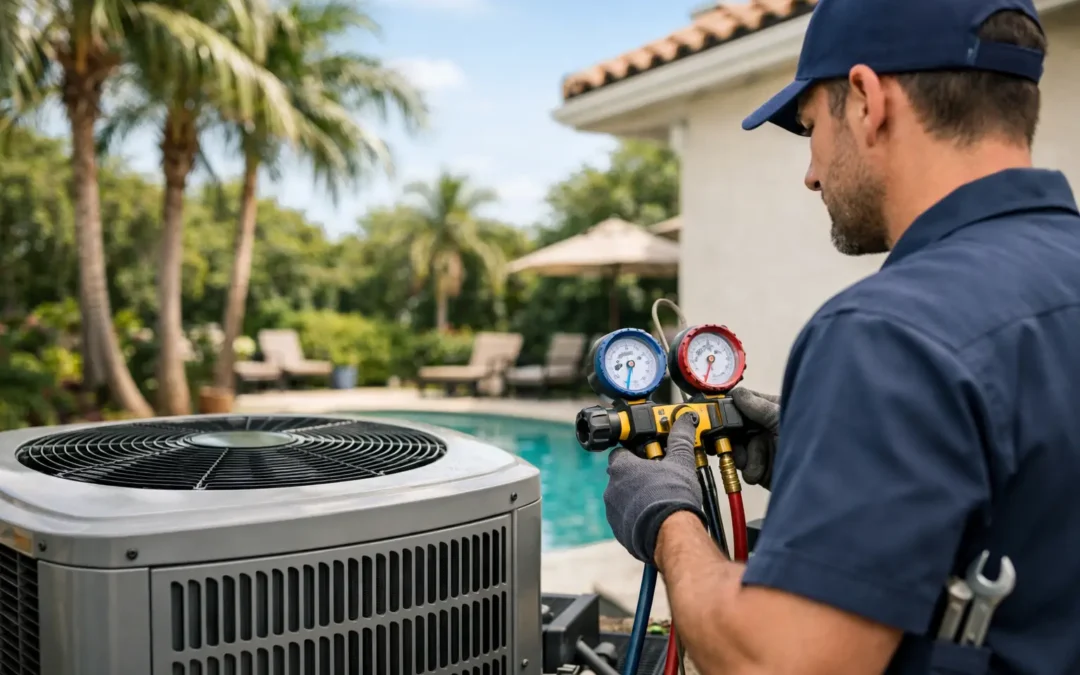
If your AC starts struggling in July, it is already late. That is the reality behind most AC system service recommendations Florida homeowners hear after a breakdown. In a place where air conditioning runs hard for most of the year, waiting for obvious trouble usually means higher repair costs, lower efficiency, and a house that gets uncomfortable fast.
Florida homes ask more from an AC system than homes in milder climates. Long cooling seasons, heavy humidity, salt air in some areas, and sudden storms all add wear. A service plan that might be optional elsewhere becomes practical here. The goal is not just to keep the system running. It is to keep it running safely, efficiently, and predictably when your home depends on it most.
AC system service recommendations Florida homeowners should follow
The most useful recommendation is simple: schedule professional maintenance before peak summer demand, then pay attention to how the system behaves the rest of the year. For many homes, one thorough service visit in spring is the minimum. For older systems, homes with pets, larger households, or units that seem to run constantly, a second visit later in the year often makes sense.
That timing matters. When temperatures climb across Southwest Florida, service schedules fill quickly. If you wait until the first heat wave, you may be competing with emergency calls. Preventive service gives a technician time to catch worn parts, low refrigerant, drainage issues, dirty coils, or weak electrical connections before they turn into a no-cooling call.
Homeowners sometimes ask whether annual service is enough. The honest answer is: it depends. A newer, properly sized system in a well-maintained home may do well with one major visit and regular filter changes. An older unit, especially one exposed to high humidity and constant use, may need closer attention. Good recommendations are based on system age, runtime, indoor air quality needs, and how quickly small issues appear.
What professional AC service should include
Not all tune-ups are equal, and that is where homeowners can get frustrated. A real service appointment should go beyond a quick glance at the outdoor unit. It should include inspection, cleaning, testing, and a clear explanation of anything found.
A technician should check refrigerant performance, clean or inspect coils as needed, examine the condensate drain, test electrical components, inspect wiring and connections, evaluate thermostat operation, and confirm the blower and airflow are working as they should. Filter condition should be discussed, but that is only one piece of the picture.
Drainage is especially important in Florida. High humidity means your AC removes a lot of moisture from the air. If the condensate line starts clogging, you can end up with water damage, microbial growth near the air handler, or an unexpected system shutdown if the safety switch trips. That kind of issue is common enough that it deserves real attention during service.
Electrical inspection also matters more than many homeowners realize. Loose connections, failing capacitors, and contactor wear can all cause erratic operation or total failure. In storm-prone areas, power fluctuations can add stress to HVAC components over time. A service visit should help identify those risks before they leave you without cooling.
The warning signs you should not ignore
A system does not have to stop completely to be telling you something is wrong. In fact, many expensive repairs start with smaller symptoms that are easy to explain away.
If your AC is running longer than usual, struggling to reach the thermostat setting, producing weak airflow, or creating uneven temperatures from room to room, that is worth checking. Higher utility bills without a clear reason can also point to declining efficiency. So can excess indoor humidity, especially if the home starts feeling sticky even when the temperature looks normal.
Strange sounds are another signal. Buzzing, rattling, grinding, or repeated clicking are not normal operating sounds. Neither are musty odors coming through the vents. Sometimes the issue is minor, such as a loose panel or clogged drain. Sometimes it points to motor wear, electrical problems, or dirt buildup that is making the system work harder than it should.
Short cycling deserves particular attention. If the system turns on and off too frequently, it may be dealing with airflow restrictions, thermostat issues, refrigerant problems, or an oversized setup. Short cycling adds wear and wastes energy. It is one of those problems that can look small from the outside but create larger damage if ignored.
Maintenance between service visits
Professional service is essential, but homeowners still play a big role in AC performance. The most important routine task is replacing the filter on schedule. In many Florida homes, that means checking it monthly and replacing it every one to three months, depending on filter type, pets, dust levels, and how often the system runs.
A clogged filter restricts airflow, which can hurt comfort and strain the equipment. It may also contribute to frozen evaporator coils or poor humidity control. Many people assume a stronger, thicker filter is always better, but that is not automatically true. The right filter depends on what your system is designed to handle. Too restrictive, and airflow can suffer.
It also helps to keep the outdoor unit clear. Leaves, grass clippings, and overgrown landscaping can block airflow around the condenser. You do not need to perform a deep cleaning yourself, but keeping the area open gives the system a better chance to reject heat effectively.
Inside the home, pay attention to vents and returns. Closing too many supply vents can throw off system balance and reduce efficiency. Furniture, rugs, or storage blocking returns can create similar problems. These are small details, but they affect how hard the system has to work.
Repair or replace? The answer is not always obvious
One of the most common questions during service calls is whether a struggling AC should be repaired or replaced. There is no single rule that fits every home.
If the system is relatively new and the problem is isolated, repair is often the practical choice. If the unit is older, needs frequent repairs, uses outdated refrigerant, or can no longer keep up with Florida heat and humidity, replacement may provide better long-term value. Efficiency gains can also make a difference in utility costs, especially when the system runs for much of the year.
Still, replacement is not automatically the right move just because the unit has age on it. Some systems are well installed, properly maintained, and still worth repairing. Others become expensive to own before they fully fail. A trustworthy recommendation should weigh repair history, current condition, expected lifespan, comfort issues, and operating cost – not just age.
Sizing matters here too. A bigger system is not always better. An oversized unit may cool quickly without removing enough humidity, leaving the home cold but clammy. An undersized unit may run continuously and still struggle. If replacement is on the table, load calculations and home-specific factors should guide the decision.
Why local climate changes the service advice
General HVAC advice from national sources can miss what Florida homes actually deal with. Humidity control is a bigger factor here. Storms and power disturbances are more relevant. In coastal and near-coastal environments, corrosion can affect outdoor equipment faster. Long cooling seasons mean wear accumulates differently than it would in a region where systems rest for months.
That is why local experience matters. Service recommendations should reflect how Florida systems age in real homes, not in ideal conditions. For homeowners in areas like Cape Coral, Fort Myers, and North Fort Myers, the best service approach usually combines preventive maintenance, fast attention to small symptoms, and honest guidance on whether a repair is still worth making.
If you are unsure whether your AC is due for service, the simplest test is this: has it been professionally inspected within the last year, and is it cooling your home without noise, humidity issues, or rising bills? If not, it is probably time to have it looked at. Companies like Infinite Electric & Air focus on exactly that kind of practical, climate-aware service.
A good AC system should not be something you have to think about every day. With the right service schedule and the right attention to early warning signs, it can stay that way even through the toughest part of a Florida summer.