
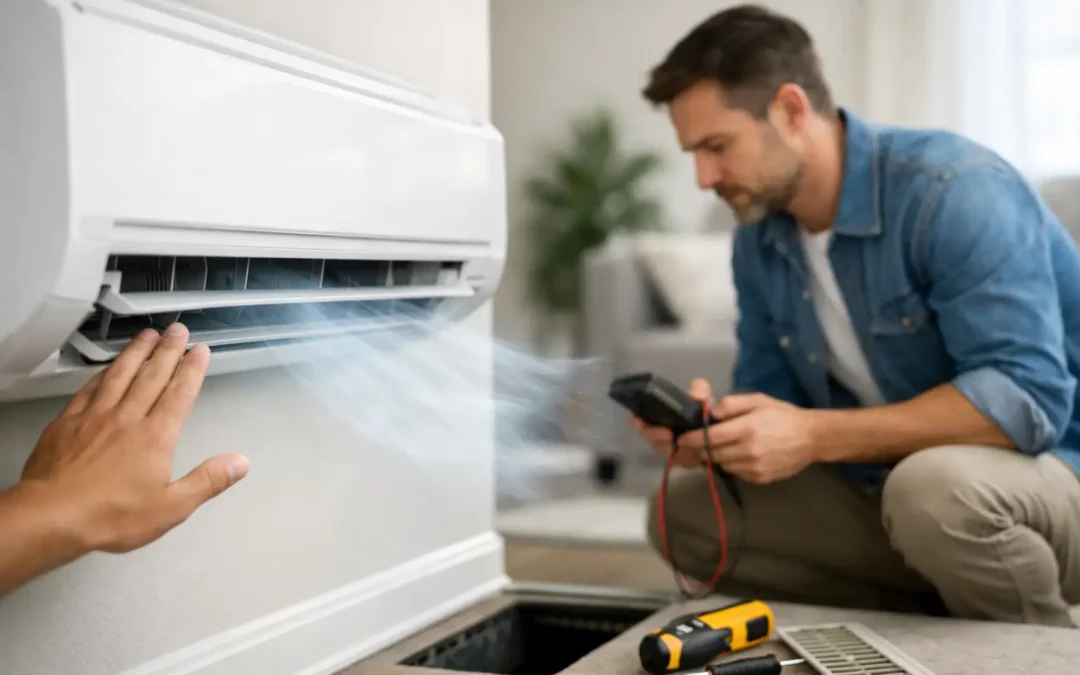
When your AC is running but the house still feels sticky, airflow is often the real problem. This AC airflow problems homeowner troubleshooting guide is built for Southwest Florida homeowners who need clear, safe steps before a small issue turns into a hot, expensive one.
In our area, airflow problems show up fast. A system that is slightly restricted in a mild climate can feel completely overwhelmed during a Cape Coral or North Fort Myers summer. If some rooms are warm, vents feel weak, or the unit seems to run nonstop, the goal is to figure out whether the issue is something simple you can address or a sign that a licensed HVAC technician should take over.
AC airflow problems homeowner troubleshooting guide: where to start
Start indoors, not at the outdoor unit. Most airflow complaints come from restrictions inside the home or at the air handler. Before you do anything else, set the thermostat to Cool, lower the temperature setting a few degrees, and switch the fan from Auto to On for a minute. Then walk to several supply vents and check whether the airflow is weak everywhere or only in certain rooms.
That distinction matters. Weak airflow at every vent usually points to a system-wide issue like a dirty filter, blower problem, frozen evaporator coil, or major duct restriction. Weak airflow in only one or two rooms often suggests a closed damper, blocked vent, disconnected duct, or duct leak in that branch.
If you notice almost no air at all, turn the system off and avoid forcing it to run for hours. Low airflow can let the coil get too cold and freeze, which creates a larger repair.
Check the air filter first
This is the most common cause, and it is also the easiest to miss. A filter that looks only “slightly dirty” can still choke airflow enough to affect comfort and efficiency, especially during long cooling cycles.
Pull the filter out and inspect it in good light. If the surface is coated with dust or you cannot see much light through it, replace it. Make sure the new filter matches the correct size and airflow direction. The arrow on the frame should point toward the air handler, not toward the return grille.
There is a trade-off here that homeowners do not always hear about. Very high-MERV filters can catch smaller particles, but if your system is not designed for that added resistance, they can reduce airflow. For many homes, the best filter is not the most restrictive one on the shelf. It is the one your system can handle while still moving enough air.
Look for blocked returns and supply vents
Your AC needs open pathways to move air out and pull air back in. If supply vents are closed in unused rooms, or if return grilles are covered by furniture, the system can struggle even when the equipment itself is fine.
Walk room to room and check for rugs, curtains, beds, or couches pressed against vents and returns. Open supply registers fully unless a technician has specifically balanced the system another way. Also check for dust buildup on grilles. Heavy buildup does not always cause the whole problem, but it can contribute.
In Florida homes, it is common to rearrange furniture or close vents in guest rooms to “save money.” Usually, that does not help. It can throw off pressure in the duct system and reduce comfort elsewhere.
Check for signs of a frozen evaporator coil
A frozen coil is one of the most common reasons an AC blows little or no air. You may hear the system running, but airflow drops because ice forms across the coil and blocks movement through it.
Common warning signs include weak airflow at all vents, visible frost on refrigerant lines, water around the indoor unit after thawing, or a system that cools poorly during long run times. If you suspect ice, turn the thermostat from Cool to Off and set the fan to On. Let it thaw completely before restarting. This can take several hours.
Do not chip at ice or try to force panels open. The larger question is why it froze. A dirty filter can cause it, but so can a blower problem, dirty coil, low refrigerant, or a blocked return. If the coil freezes again after a filter change and full thaw, that is a strong sign you need professional service.
Pay attention to the blower and indoor unit
The blower motor is what actually pushes air through your ductwork. If it is failing, airflow can feel weak even when the thermostat, condenser, and refrigerant side seem normal.
Listen for changes in sound. A blower issue may create humming, rattling, squealing, or an air handler that starts and stops oddly. You might also notice the outdoor unit running while indoor airflow stays low. That can happen when the indoor and outdoor components are no longer working in sync.
Some homeowners are comfortable checking whether the breaker has tripped, but that should be the limit for most DIY steps. If the breaker trips again after being reset once, stop there. Repeated trips can point to an electrical fault, failing motor, or capacitor issue that needs safe diagnosis.
Inspect visible ductwork for obvious problems
If certain rooms barely get air while others feel normal, the problem may be in the ductwork. In homes with accessible attic or garage duct runs, you may be able to spot loose connections, crushed flex duct, or sections that have come apart.
You do not need to crawl through a hot attic for a full investigation to get useful clues. Even a quick visual check near the air handler can help. Look for disconnected ducts, torn insulation, or sharp bends that pinch flexible ducting. A disconnected supply line can dump cooled air into the attic instead of the room that needs it.
If you see damage, resist the urge to patch everything with whatever tape is nearby. Duct repairs need the right materials and sealing methods to hold up in heat and humidity.
Don’t ignore the outdoor unit, but keep the focus realistic
The outdoor condenser does not create indoor airflow, but it still affects how well the whole system cools. If the condenser coil is packed with debris, the system can run longer and seem like an airflow issue when the deeper problem is poor heat transfer.
Make sure the unit has clearance around it and remove leaves, palm debris, and overgrowth. You can also look for obvious damage after storms, which is especially relevant in Southwest Florida. Just remember that a clean condenser will not fix weak airflow caused by a clogged filter, frozen coil, or failing blower.
When airflow problems point to a bigger issue
Sometimes the problem is not a single blocked vent or dirty filter. It is a system that is mismatched, aging, or poorly maintained. If your AC has always struggled in the hottest part of the afternoon, or if certain rooms are consistently uncomfortable year after year, the issue may involve duct design, static pressure, insulation, or equipment sizing.
That is where experience matters. A homeowner can identify symptoms, but proper testing is what separates a guess from a reliable repair. Measuring airflow, checking static pressure, evaluating blower performance, and inspecting coil condition all help pinpoint the real cause.
If your system is older and airflow complaints are becoming more frequent, a repair may still make sense, but it depends on what is failing. A simple filter or blower wheel cleaning is very different from ongoing freeze-ups tied to refrigerant problems or a worn-out air handler.
When to call a professional for AC airflow problems
Call for service if the coil freezes more than once, airflow is weak throughout the home after changing the filter, breakers are tripping, the blower is making unusual noise, or you suspect a duct has come loose in an inaccessible area. You should also call if the AC runs constantly without keeping up, because that can drive up energy costs while adding wear to the system.
A licensed HVAC technician can inspect the full air path, not just the thermostat setting or outdoor unit. That matters because airflow problems often have more than one cause. In a humid climate, even a moderate restriction can affect comfort quickly, and delaying service can turn a manageable repair into a larger one.
If you need help getting your system back to normal, the team at Infinite Electric & Air can diagnose airflow issues, explain the repair clearly, and recommend the next step with transparent pricing. You can learn more at https://infinitefl.com/.
A home should not feel muggy and uneven when the AC is running. If the airflow has changed, trust what you are noticing, start with the safe basics, and bring in a professional when the signs point beyond a simple fix.